Preserving Visual and Textual Histories
Since its inception, the Egypt Exploration Society has amassed extensive archival materials documenting fieldwork, including lantern slides and excavation (or ‘field’) journals. Lantern slides are photographic transparencies mounted in glass frames, documented sites, monuments, and excavation activities. They were used to share findings with academic and public audiences. These sources play complementary roles, preserving both the visual and textual records of archaeological excavations at the EES. However, not all lantern slides and archival work materials were published by archaeologists.
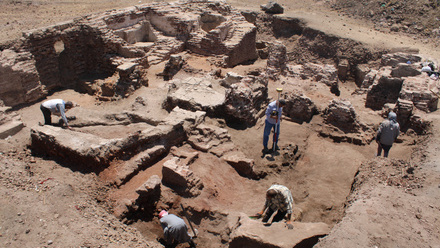
Banner Image: Archaeological discovery at Abydos, (AB.LS.3.008).
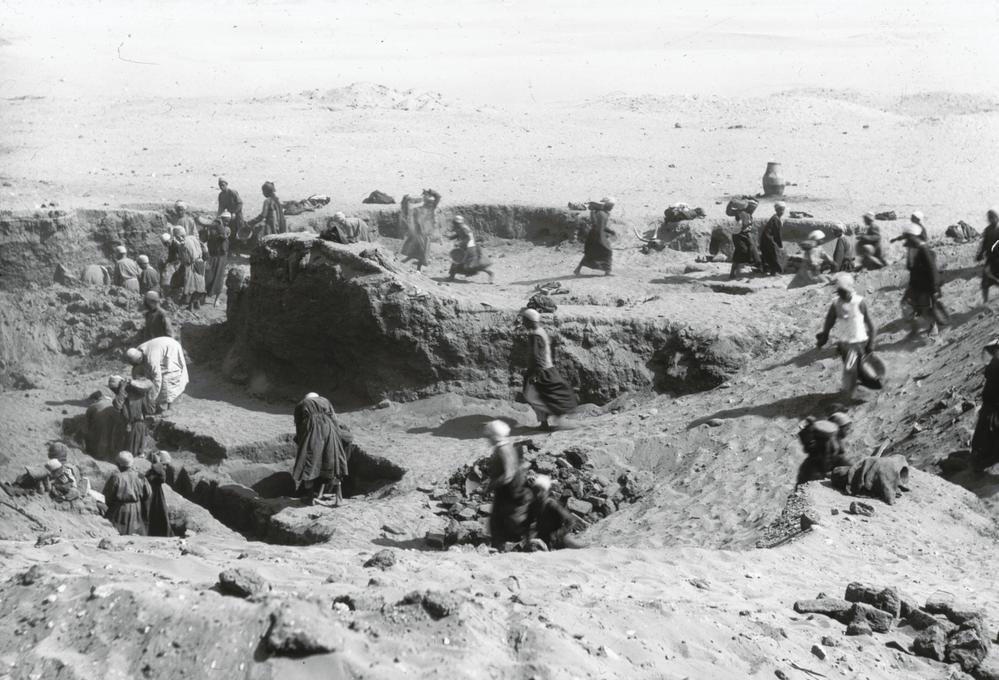
Abydos: Workmen excavating on-site. 8 (AB.LS.3.002).
Whilst the EES publications for the Cemeteries of Abydos included images of indigenous and non-Western workers, they were almost always shown as labourers in action, often within a dig pit or working within the excavation site. The EES’ archival lantern slide collection provides a rich visual record of fieldwork, and it also shows insight into the social and labour dynamics of the excavation environment. This collection highlight focuses on how archival objects can provide insight into the unnamed non-Western, likely Indigenous Egyptian workers whose labour underpinned much of the manual work during the 1909–1911 Abydos excavation seasons.
Lantern Slides
With the EES’ current digitising and rehousing lantern slide project, many unpublished lantern slides from the multiple Abydos excavations have uncovered multiple unpublished images of non-Western archaeologists. This includes a rare up-close portrait of a non-Western man on excavation, whose name and heritage are currently unknown.
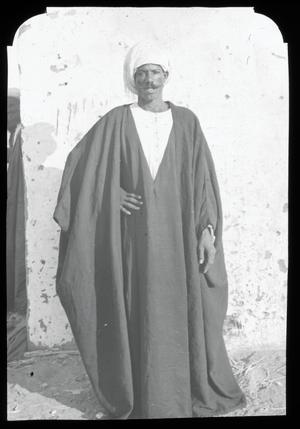
EES Abydos. Portrait of Ganger. 5. (AB.LS.3.001). If you identify the person photographed within this lantern slide and would like it taken off the website, please contact the EES directly.
The archival collection of lantern slides also conveys aspects of daily life often omitted from published journals, such as meals, living areas, and moments of informal interaction.
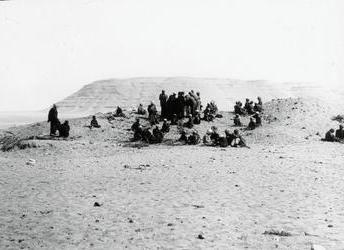
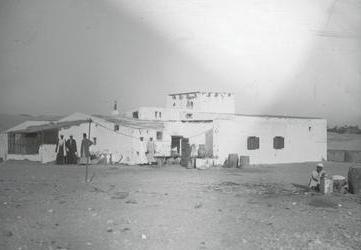
Abydos: Workmen dinner hours. 8 (AB.LS.3.005, first) and Abydos: Fund House. 1 (AB.LS.3.006, second).
One slide, for example, depicts a small disused railway track in Abydos. This feature is also noted in the journals:
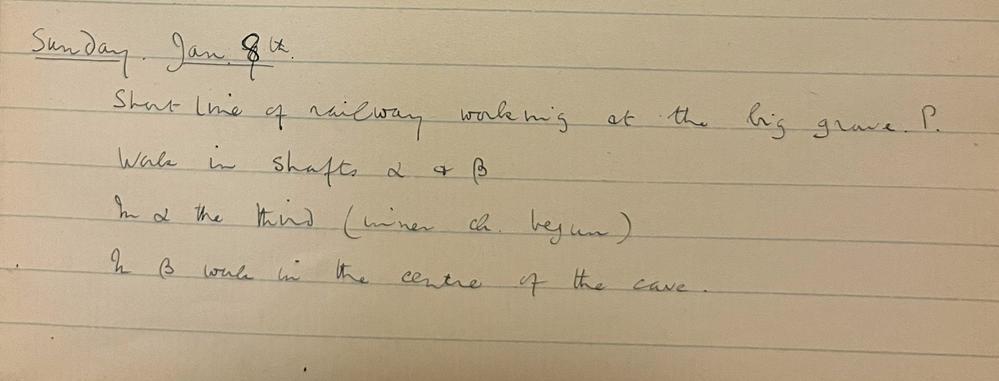
Sunday Jan 8th
Short line of railway working at the big grave P.
…..
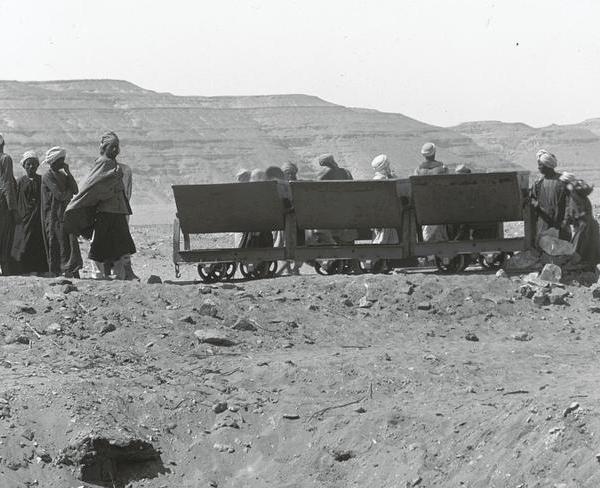
Abydos: Light Railway. 10, (AB.LS.3.003).
Whilst images of the Western excavators’ dig house were sometimes published, the archival collections also show the non-Western work force living spaces, which corresponds to a note within the field journal stating that the workmen were in charge of building their own huts.
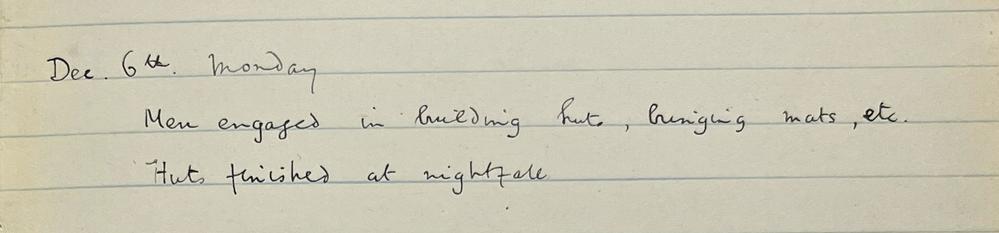
Dec 6th Monday
Men engaged in building huts, bringing mats, etc.
Huts finished at nightfall.
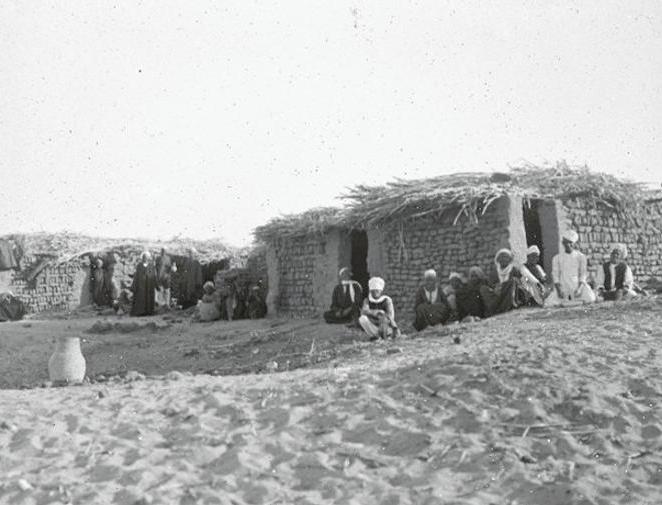
Abydos: Workmen's hut. EES 4 (AB.LS.3.012).
Although their identities remain unknown, the image offers a rare glimpse into everyday life at the site. Moments such as these are rarely recorded in formal excavation reports, especially regarding the non-Western workforce.
The Field Journals
Together, the Abydos lantern slides and field journals offer a more comprehensive view of archaeological work during the three seasons at Abydos. While the slides present a visual account of the landscape, artefacts, excavation processes, and labourers, the journals provide essential contextual details, including who carried out the work and how it was organised. When examined side by side, these materials help highlight the collaborative workforce that underpinned EES excavations, naming non-Western workers and highlighting both the technical and human dimensions of archaeological practice.
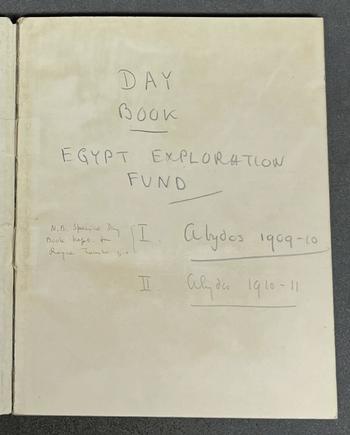
The Abydos Workforce
The Abydos ‘day book’ lists a breakdown of the workforce, including a list of names for the 1909-1910 excavation. It also includes a detail that three of the men are from the local village. Each name on the list has a letter associated with it, which corresponds to an area of the excavation site.
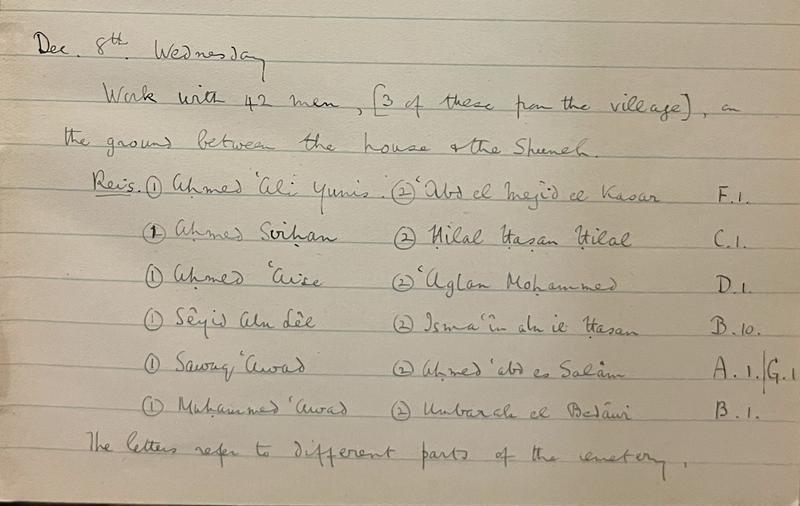
Letters of workmen names from the 1909-10 excavation at Abydos.
Dec 8th Wednesday
Work with 42 men, [3 of these from the village], on
The ground between the house + the Shuneh.
Reis (1) Ahmed ‘Ali Yunis (2) ‘Abd el Mejid ee Kasan F.1.
(1) Ahmed Suihan (2) Hilal Hasan Hilal C.1.
(1) Ahmed ‘Aise (2) ‘Aglan Mohammed D.1.
(1) Seyid Aln dee (2) Iswa’in aln ie Hasan B.10.
(1) Sawaq ‘Awad (2) Ahmed ‘abd es Salam A.1.|G.1
(1) Muhammed ‘Awad (2) Umbarak el Belawn B.1.
The letters refer to different parts of the cemetery.
Please note: As many excavators were not fluent in Arabic, these are most likely transliterations of names written down from verbal pronunciations. Therefore, spelling errors may be present.
The 1910-1991 section of the day books from Abydos are not solely written in English. There are sections of both Arabic and Italian within the book which provide more context for the workforce and their finds.
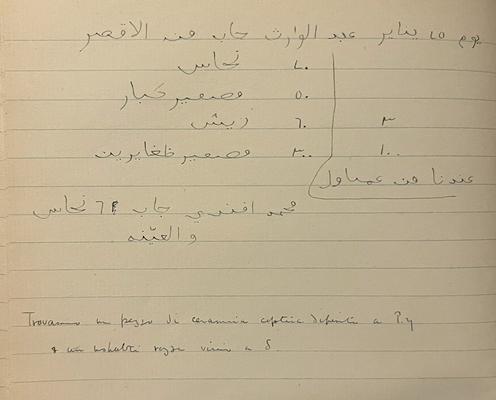
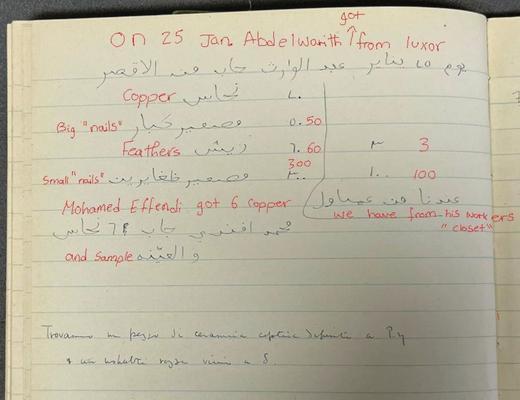
Seif Eldemerdash was able to provide a provisional translation whilst offering nuances to the language used as a native speaker of Arabic.
On the 25th Jan. Abdelwarith got from Luxor
Copper
50 Big ‘nails’
60 Feathers 3
300 Small ‘nails’ 100
Mohamed Effendi go 6 copper We have from his workers ‘closet’
and Sample
Seif notes that ‘Effendi’ is a rank similar to the English use of the word ‘sir’. Whilst the direct translation includes the word ‘feathers’ he believes that it may have another meaning in this context.
It is believed that the right-hand side of the page indicates how much is left of each object in the workers closet at the time the passage was written. For example, we see here that 100 out of 300 small nails are still currently in the workers closet.
The Italian passage below gives more context in regard to the number of the workforce and payment timings within the 1910-11 excavation.
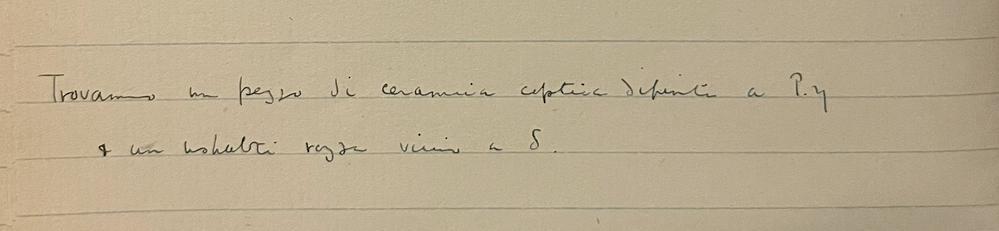
Provisional Italian Translation: Arrival of 18 men from Qurna and 11 and 2 boys from Le ‘Ar(…). Work for everyone pay after noon from above done. Others of the work (undeterminable word)
Please note: ‘sbocco’ was not able to be translated.
The lantern slides and excavation journals together offer a more nuanced account of archaeological practice at Abydos. While the non-Western workers depicted cannot yet be individually identified, the journals affirm specific workers presence and contributions by name.
Future of the Archive
Archaeologists and heritage scholars increasingly seek to restore credit to these contributors, who were historically left unnamed in publications and institutional records. Digitisation initiatives at the EES further support this work, making archival materials more accessible and enabling future efforts to document and acknowledge these contributions.
This improved accessibility will support future scholarship aimed at identifying non-Western contributors, reconstructing the labour history of archaeological sites, and exploring the everyday experiences of those present.