Digitising Decades of Discovery under Walter B. Emery
Over the past few months at the Egypt Exploration Society, I have been digitising the archives of the work led by Walter B. Emery at the North Saqqara plateau between the 1930s and the 1970s. These documents include diaries, photographs, plans, letters, etc., which are very important for understanding the main elite cemetery of Memphis, close to modern Cairo, during the period of state formation. This work is possible thanks to the generous support of the Shelby White and Leon Levy Program for Archaeological Publications.
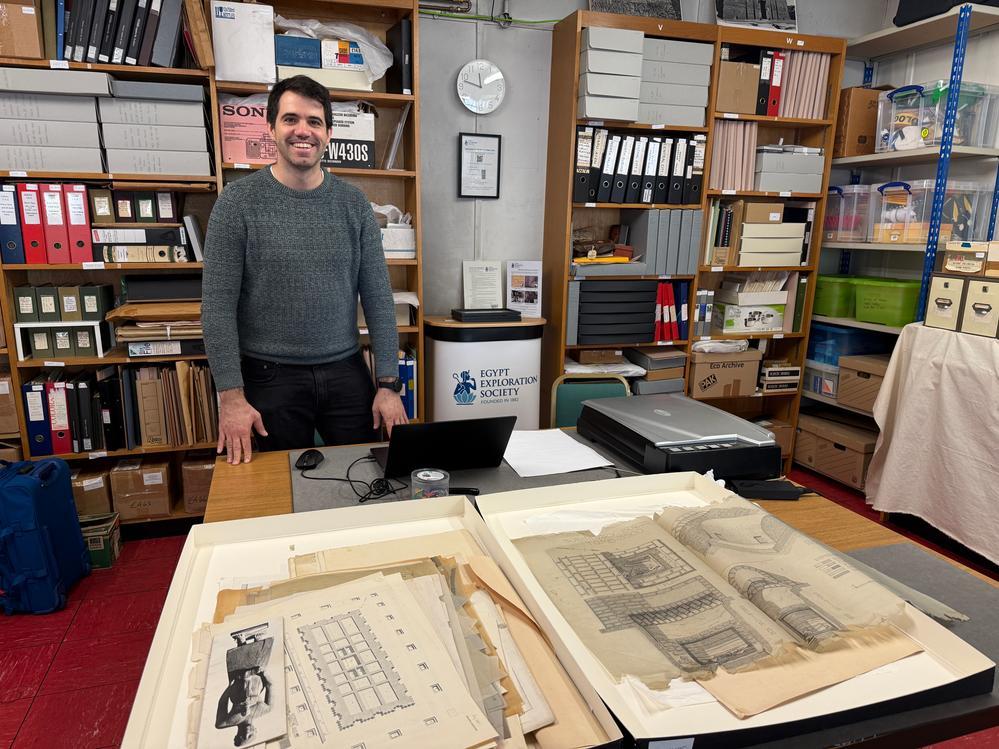
Among the documents I scanned are the original manuscripts of Emery’s Great Tombs volumes. In these books, the British Egyptologist published some of the larger tombs known to have been built during the First Dynasty. But the archives also hold a number of unpublished notes and photographs of these structures, which may clarify some of the questions that continue to be the subject of discussion among Egyptologists.
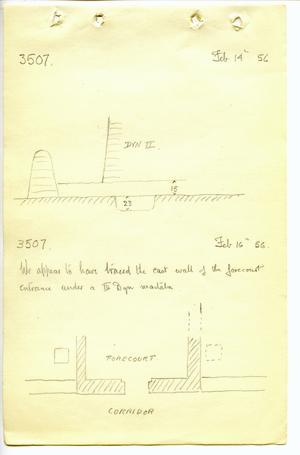
Emery’s diary notes taken during the excavation of mastaba 3507 (SAQ-GT.001).
Moreover, thanks to the generous help of Elizabeth Owen and Carl Graves, I was able to digitise the plans of over 100 tombs that were previously unknown to the scientific community. Although the documentation of these structures is very fragmentary, their plans alone provide a great opportunity for enhancing our understanding of this very important cemetery.
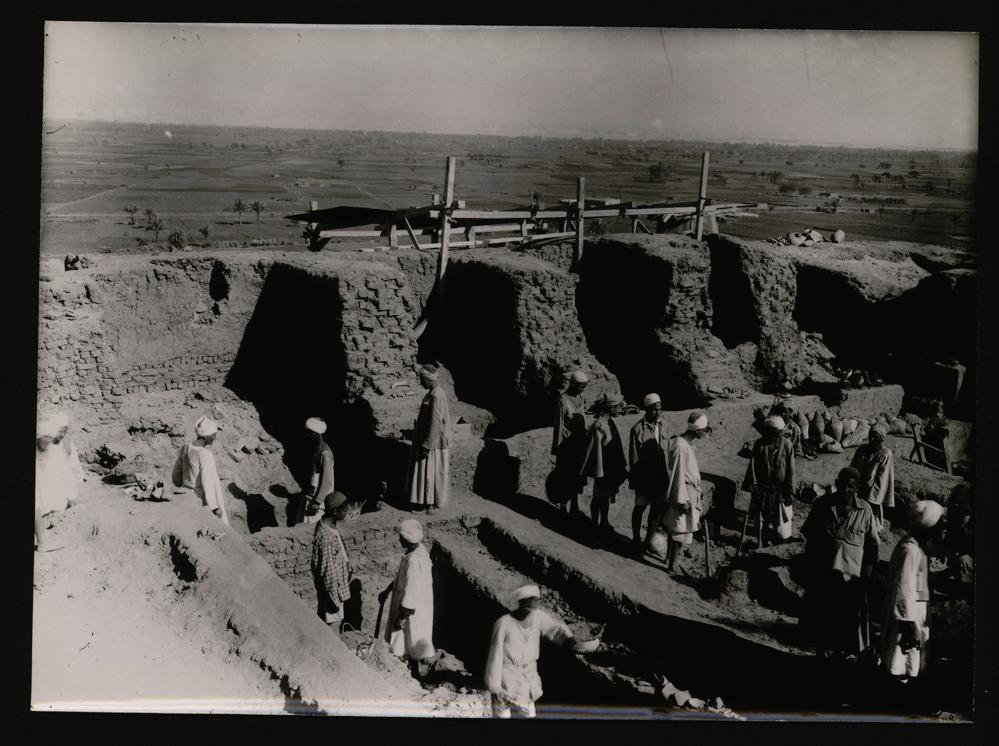
Egyptian workmen during the excavation process of mastaba 3504 (SAQ-GT.PICT).
Who were the people buried in these structures, and why did they decide to build their tombs in this site? Much more work remains to be done to answer these questions, but the last few months have allowed me to lay the cornerstone of a project that promises to shed light on very relevant aspects of the Early Dynastic Period.