LS.12 Arkell’s Excavations in Sudan
The collection, EES.LS.12, is one of many sets of lantern slides currently undergoing a digitisation and rehousing project ahead of the building development plans. Lantern slides are film positives, produced from the negatives and paired with glass plates so they may be projected and used in presentations.
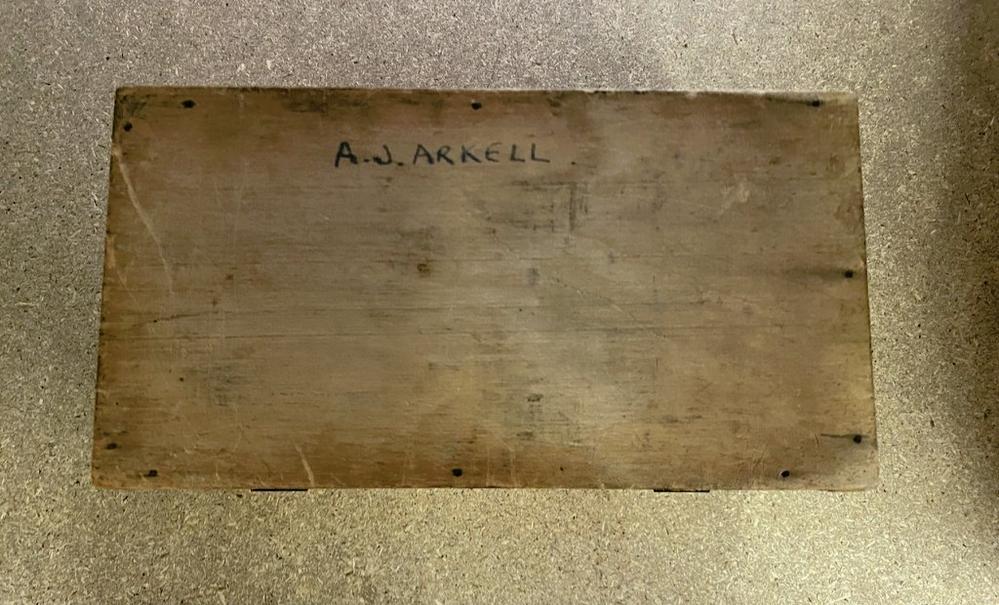
Figure 1: The original container housing LS.12, with A.J. Arkell written on the bottom.
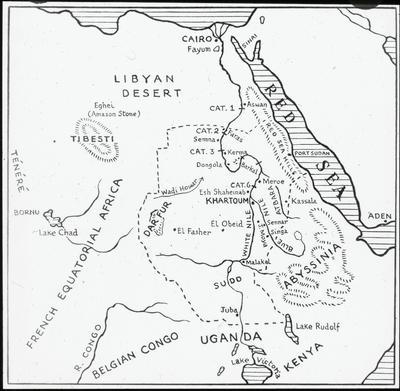
Figure 2: This map featured on LS.12.05 depicts the Nile valley and sites including Khartoum and Esh Shaheinab was labelled as: SUDAN MAP ('OLD STONE AGE').
Through the process of rehousing this collection, it was discovered that these lantern slides were housed in a box labelled A.J. Arkell on the bottom (Figure 1), revealing that they likely belonged to the archaeologist Anthony John Arkell (1898-1980). Some of the images in the slides also appear in several of Arkell’s publications such as Early Khartoum (1949) and Shaheinab (1953), however several are more personal and do not appear in either text. Arkell was known for his work with the Sudanese government, during which time he worked with the Sudan Antiquities Service and assisted in the development of the National Museum of Antiquities in Khartoum. He was later a lecturer at University College London (UCL) and Honorary Curator of the Flinders Petrie Collection.
According to the labels, the images on the slides are from both the 1944-5 excavation of a site in the Khartoum area and a 1949-50 excavation of the site Esh Shaheinab, both of which were carried out by the Sudan Antiquities Service. The slides from the Khartoum excavation are limited and picture two Meroitic burials. The slides from Esh Shaheinabare much more varied. They include images of selections of objects from the excavations, such as lithics, harpoons and pottery (Figure 3). Several of these objects can be seen on display in the Petrie Museum of Egyptian and Sudanese Archaeology today. Others featured in the slides are represented in the museum displays using casts. The rest of the slides from Esh Shaheinab include views of the site including active excavation and a neolithic burial. Finally, there are several slides which depict the camp area and members of the expedition team. One slide in particular features a group of people with two vans and depicts the beginning of the Esh Shaheinab expedition (Figure 4).
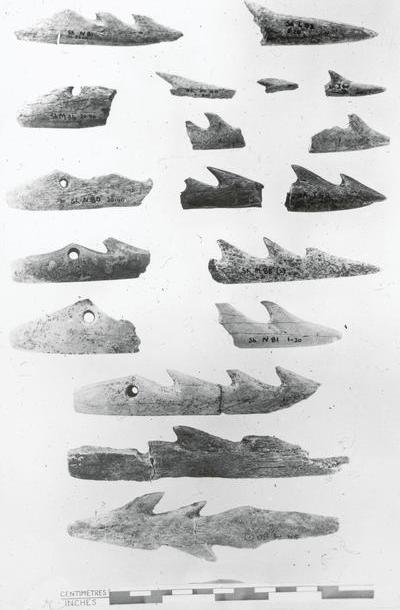
Figure 3: A selection of bone harpoons from LS.12.19 labelled: ESH SHAHEINAB BONE HARPOONS.
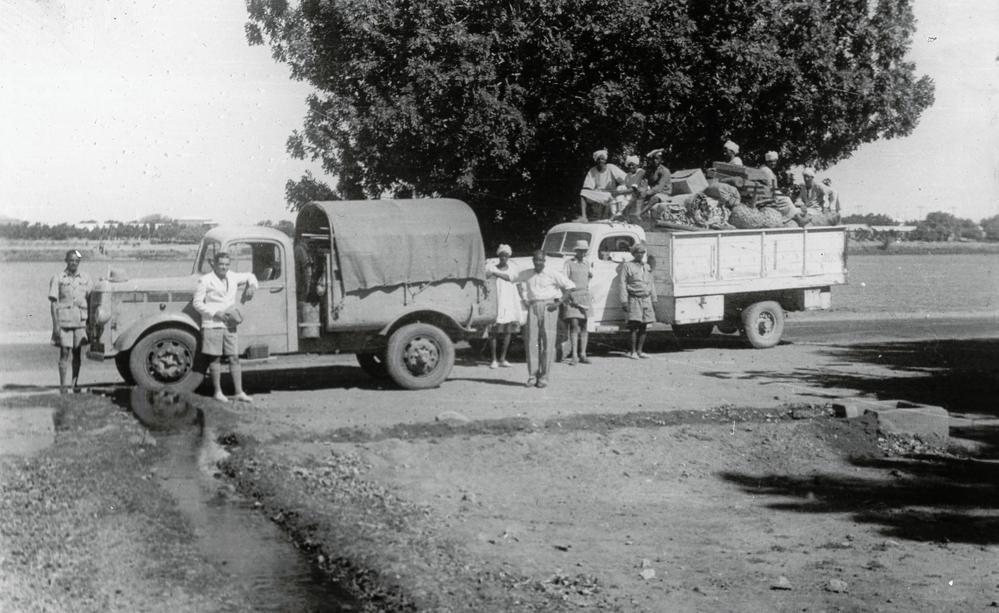
Figure 4: Image from LS.12.07 labelled: Esh SHAHEINAB. Expedition starts.
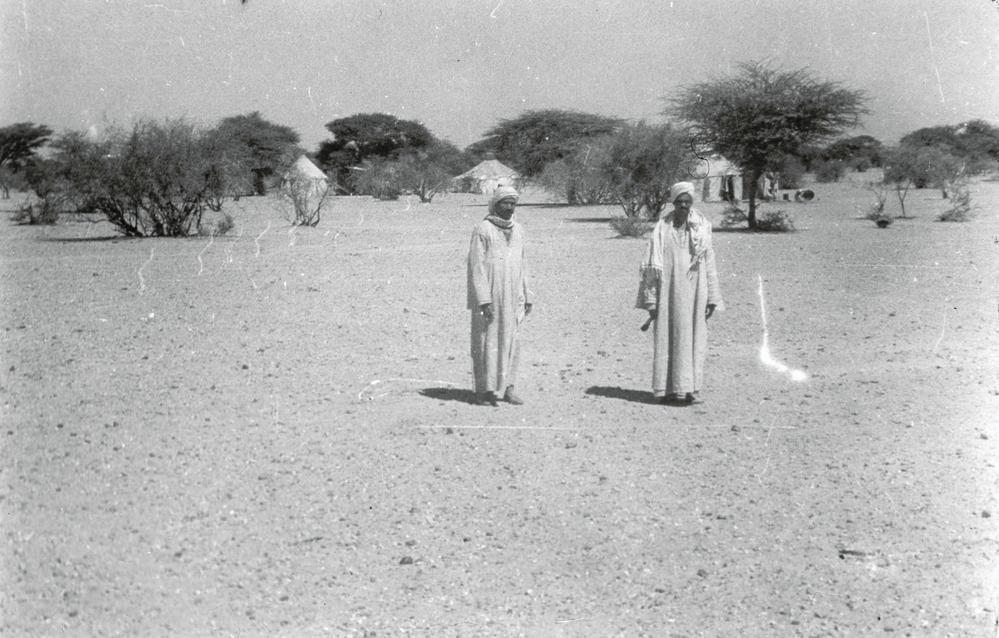
Figure 5: Image from LS.12.08 of the camp from the excavation and two Qufti team members labelled: SHAHEINAB. Camp + Quftis.
While the captions do not identify the individuals, one slide picturing two people is captioned “SHAHEINAB. Camp + Quftis” (Figure 5). The Esh Shaheinab excavation team included four Quftis, who joined them from Egypt, some of whom worked on Arkell’s earlier excavation. These Quftis were Doqtor Ali Ibrahim, his brother Beshir, Hofni Ibrahim and Hendawi Atitu. As for other members of the team who may appear in the slides, there was Abdelrahman Eff. El Fiki and Abdelrahman Mohamed who both worked at the Khartoum Museum. According to Arkell, the earlier Khartoum excavation pictured in the slides used prisoners as labourers during the excavation. However, during the Esh Shaheinab excavation they worked closely will dozens of locals who were employed on the site. As the locals took on roles such as assisting the Quftis as basket boys, it is possible that they may be the people seen in slides such as LS.12.12 (Figure 6).
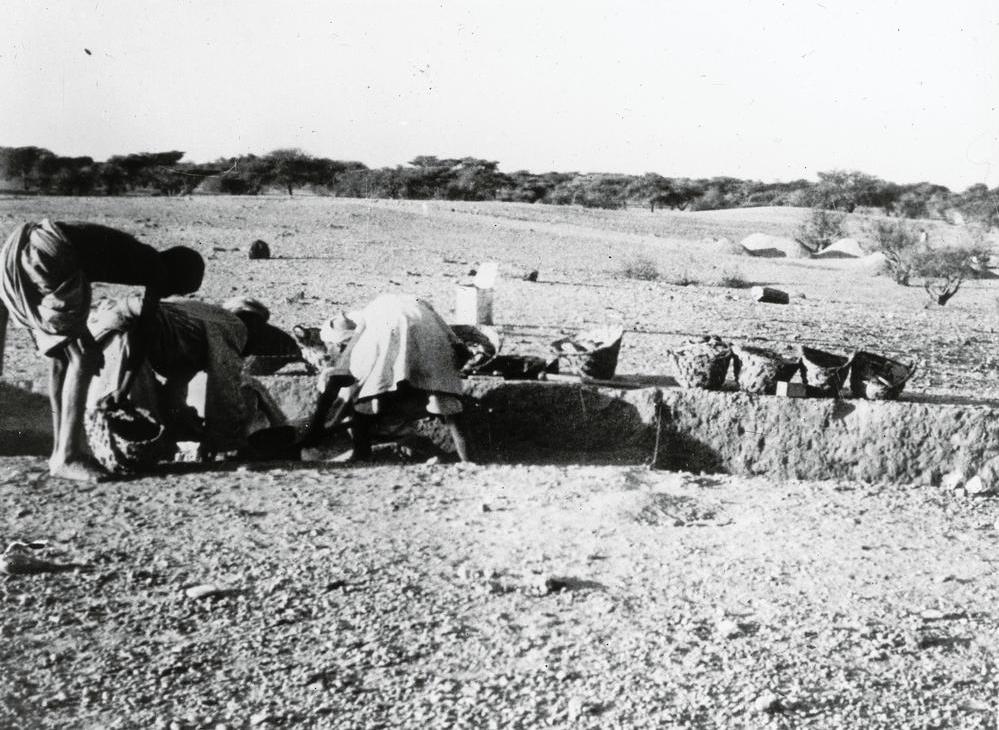
Figure 6: Image of excavation, including several team members at work, labelled: Esh. SHAHEINAB SITE. STRIP 59.
While teams conducting the excavations are detailed in the texts, the only photos of them that appear in the books are when they are either actively excavating or standing the background. They are not framed as the main subject. Yet these slides were created by Arkell so that members of his team and their camp could be included in presentations. These lantern slides preserved in the EES archive offer a way to explore how Arkell presented the excavations in his lectures and the social history behind the excavations. As Arkell was a lecturer at UCL, they can also help understand how the teaching of Egyptology has changed over time. In particular, this is notable as these slides focus on Sudan, which while included in Egyptology may often be overlooked. This collection is a very focused set of images, whilst other lantern slides show a wider range of subjects used for presentations in the 20th Century CE. To explore the EES’ lantern slides further, their digitised images will be made available to the public on our Flickr page in early 2026.
Further reading
Arkell, A.J. 1949. EARLY KHARTOUM. London: Published for the Sudan Govt. by Oxford University Press.
Arkell, A.J. 1953. SHAHEINAB. London: Published for the Sudan Government by Geoffrey Cumberlege, Oxford University Press.