Professions in Ancient Egypt
Despite living thousands of years ago, ancient Egyptians were probably not that different from you and I – they had to get up every day to go to work, they worried about various problems, and they just tried to get by. Religion played a big role in ancient Egyptian society, with the goal of entering the afterlife and enjoying a comfortable eternity. Their lives would have revolved around the religious festivals, offerings to various gods and worship of the pharaoh.
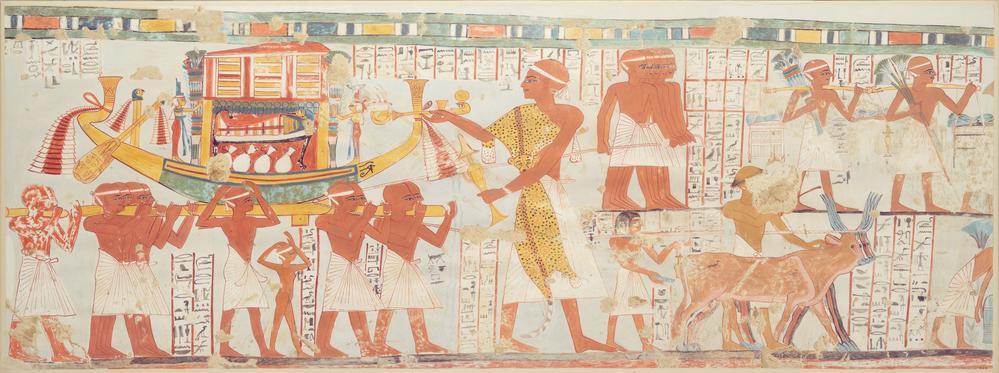
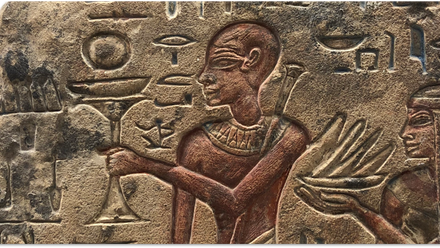
Priests (shown with bald heads) conducting a funeral, (Artwork by Nina de Garis Davies, The Metropolitan Museum of Art, 35.101.1).
Hierarchy was a very important element in ancient Egyptian society, and people were defined by their social role. This can be seen in the importance given to titles and rank – the closer you were to the pharaoh, the more powerful you were considered to be. Regardless of social status, everyone worked towards the success of Egypt.
Sources of Daily Life in Ancient Egypt
The most information we have about the daily lives of the ancient Egyptians actually comes from tombs and cemeteries. These sometimes contained domestic and personal possessions, which give us a glimpse into people’s lives and what was important to them. Many tombs have beautiful decorations, including images of daily life scenes. The owners of the tombs were keen to tell visitors about their life, their job, and their achievements. However, as a good afterlife was important for ancient Egyptians, they could sometimes be prone to exaggeration, so whether the tomb scenes depict reality, or the owner’s own aspirations, is a factor to keep in mind. We also have information from various ancient Egyptian texts – some of which are literary sources, which were intended to teach and guide ancient Egyptians in how to live a good life. Others are day-to-day letters, contracts and communications from which we can piece together how the ancient Egyptians lived, from their own words.
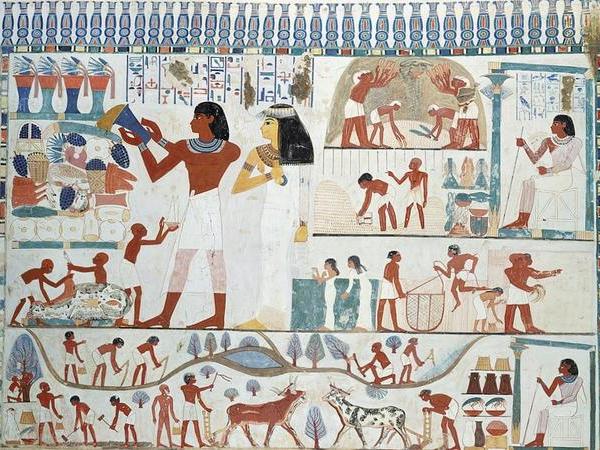
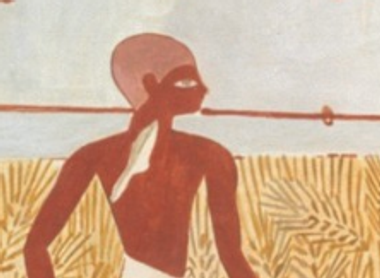
Scene showing agricultural workers from the Tomb of Nakht (TT52) in Tehebes.
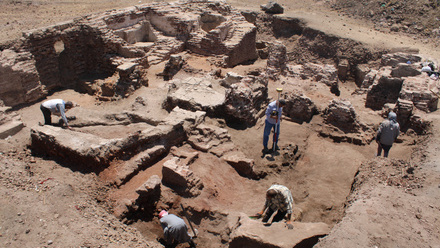
We have far less information about the majority of the population of ancient Egypt, who likely lived in relative poverty. They were very unlikely to know how to read or write, and did not have richly decorated tombs. Some did leave behind possessions, which have been found during excavations: tools, simple pottery, food and personal adornments, all of which give us a small window into their lives.
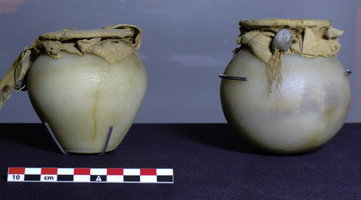
Travertine jars with textile lids from the tomb of Amunet in the Grand Egyptian Museum (72338-9).
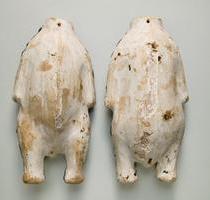
Food case probably containing a preserved pigeon (The Metropolitan Museum of Art, 19.3.289a, b)
Popular Professions in Ancient Egypt
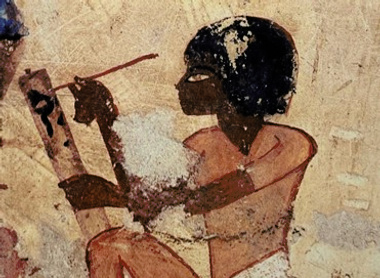
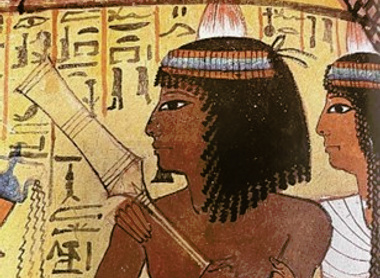
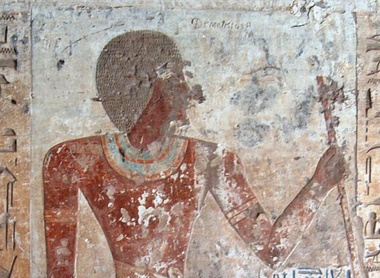
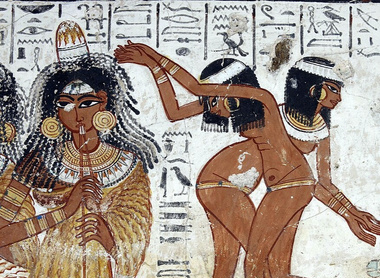
Professions in ancient Egypt spanned a wide range of roles which were essential to sustaining both daily life, and the ancient Egyptian state: from farmers, who were the backbone of the economy, to skilled workers such as carpenters, pottery makers, and metal workers, some of whom created the objects we can see in museums today. Many ancient Egyptians served as soldiers or military officers helping to protect the borders of Egypt, and others were merchants who facilitated both domestic and long-distance trade. Other professions are similar to ones we still have today, such as bakers, administrators, doctors and musicians. All these various occupations helped shape a complex society in which everyone played a part in maintaining the status quo and in generating prosperity.
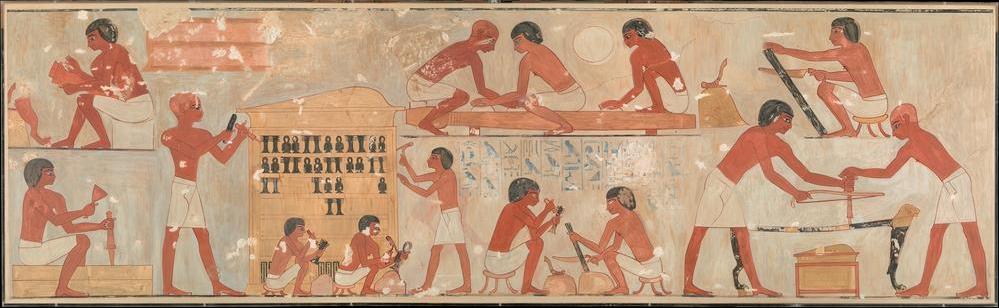
Carpenters working on various objects, including a shrine, lion-shaped bed, and more from the Tomb of Rekhmire, (Artwork by Nina de Garis Davies, The Metropolitan Museum of Art, 35.101.1).
Click below to hear and read reflections on a selection of jobs in ancient Egypt!
The profiles below are based on real people who lived in New Kingdom Egypt (c. 1550–1069 BCE). They include information we know about their job roles in general from various sources, going beyond what is known about the exact person.