Charms of the Nile Valley
What are amulets, exactly?
Amulets are miniature personal objects worn on the body, such as pendants, rings and bracelets. They can also be carried around or placed in specific spaces in homes, tombs or temples. Unlike ordinary ornaments or statues, amulets are believed to possess beneficial or magical powers that come from their symbols, materials, colours or ritual activation. In Ancient Egypt, amulets were worn by both the living and the dead. Most are small versions of statues with the same features as their larger counterparts. They often had holes or loops so they could be used as jewellery or sewn to a mummy.
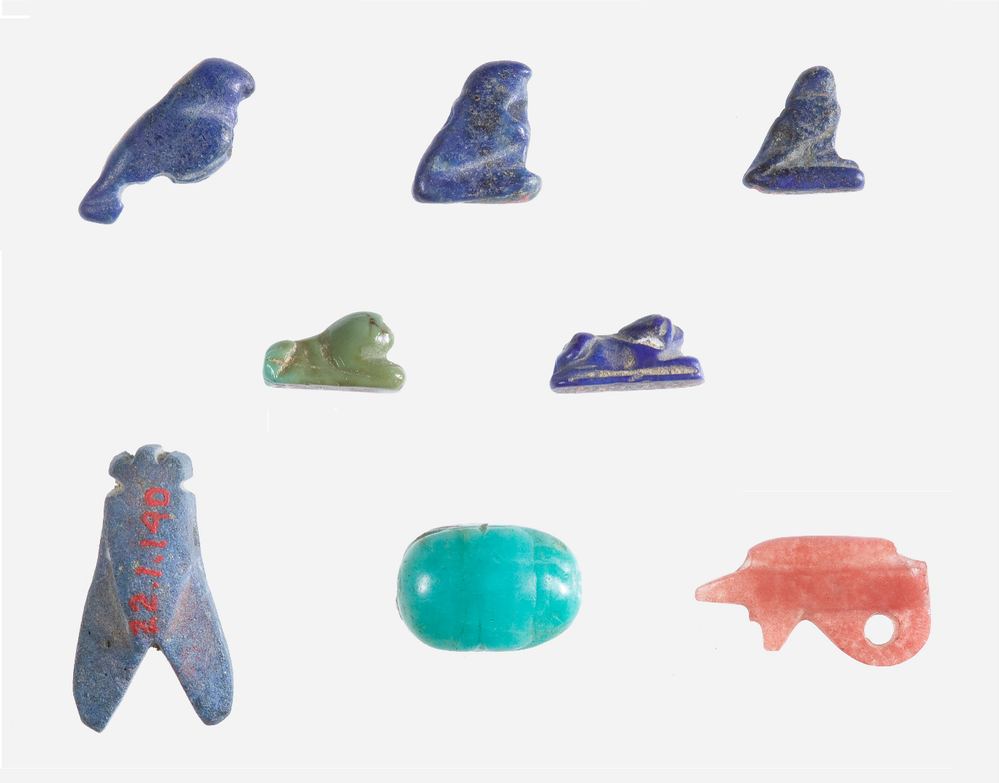
Assortment of Middle Kingdom Amulets from Memphis. From left to right, top to bottom. i) Lapis Lazuli Falcon Amulet, 22.1.130; ii) Lapis Lazuli Falcon Amulet; 22.1.132; iii) Lapis Lazuli Falcon Amulet, 22.1.133; iv) Green Jasper Lion Amulet 22.1.135; v) Lapis Lazuli Frog Amulet, 22.1.137; vi) Fly amulet, 22.1.140; vii) Green Feldspar Scarab, 22.1.127; viii) Carnelian Wedjat Eye Amulet, 22.1.128. (The Metropolitan Museum of Art).
When did amulets appear and what were their materials and forms?
The earliest known amulets in ancient Egypt date to the prehistoric period, about 6,400 years ago and are linked to the Badarian culture. They became more common during the subsequent Naqada phase and remained popular until the Greco-Roman period. This long and continual use makes amulets one of the most widespread objects in ancient Egyptian culture. They were produced from multiple materials, mainly stone, faience and semi-precious stones. Amulets also took several different forms. Some showed gods such as Isis, Osiris and Anubis. Others depicted animals like scarabs, falcons and cobras. Many amulets represented parts of the human body, including the heart, the ear and fingers. Various others took inanimate or hieroglyph-inspired forms, which frequently comprised the tit (or tyet), the djed-pillar and the papyrus column.
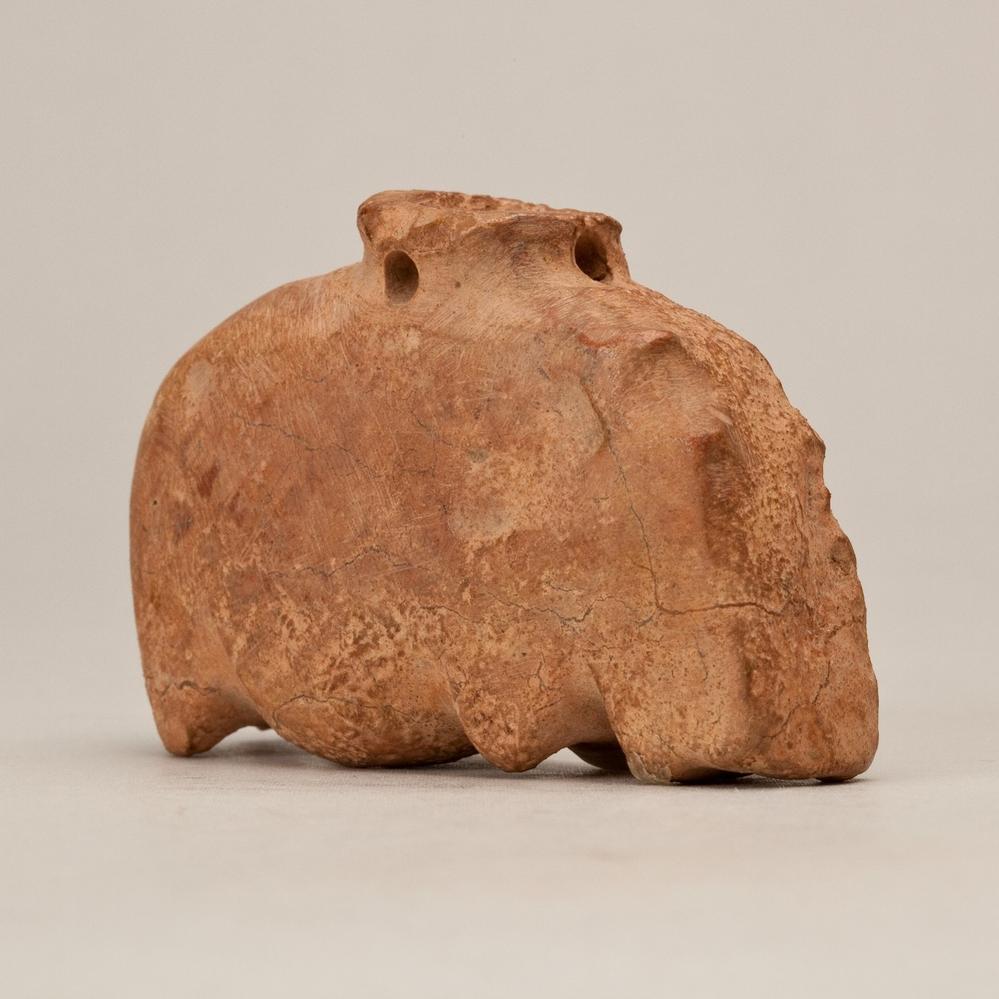
Predynastic Pink Limestone Hippopotamus Amulet, (The Metropolitan Museum of Art, 07.228.62).
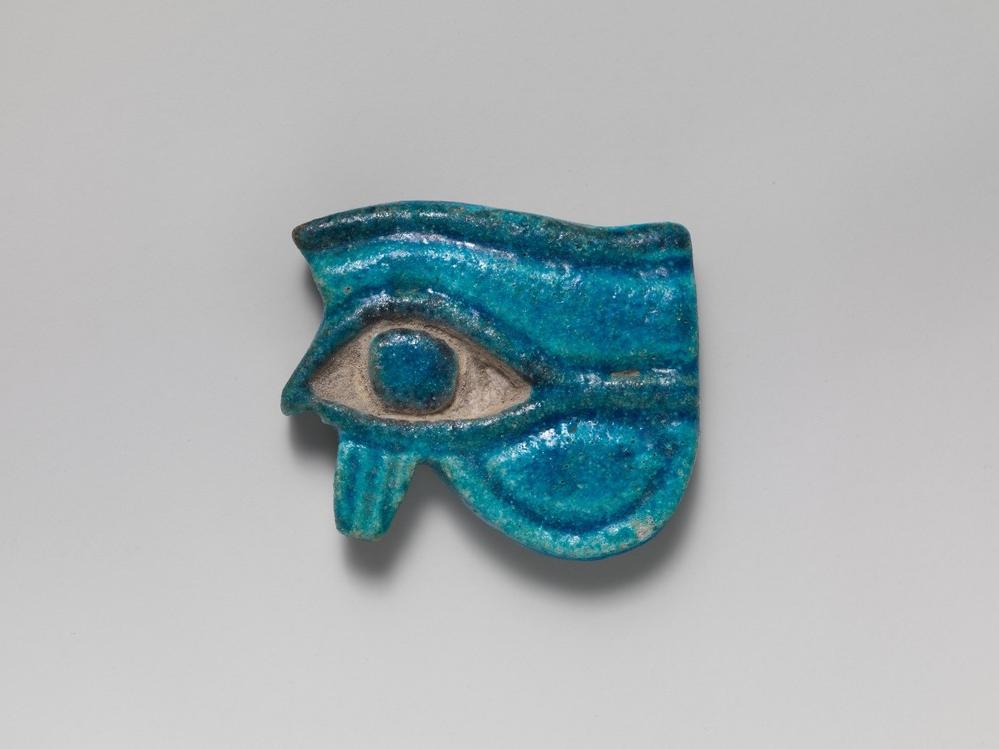
Faience Wedjat/Udjat Eye Amulet, Roman Period, (The Metropolitan Museum of Art, 74.51.4526).
What purposes did amulets serve?
Amulets were integral to daily life and funerary practices. People used them as talismans or lucky charms. They served many purposes, mostly protection and healing. Some others were believed to give the wearer animal qualities, reflect royal power or professional skills. Many amulets carried symbols, images or inscriptions, including sacred names and spells, showing identity, social status and beliefs. In burial contexts, certain amulets, such as the heart (oval) scarab, were placed with the deceased and attached to mummy wrappings. This was prescribed in religious texts like the Book of the Dead. The amulets were meant to protect the body and ensure safety in the afterlife. For this reason, scarabs are the most usual type of amulet in Ancient Egypt. Other popular amulets included the falcon, the wedjat eye and the god Horus. All are associated with healing and royal power through light, restoration and high vision.
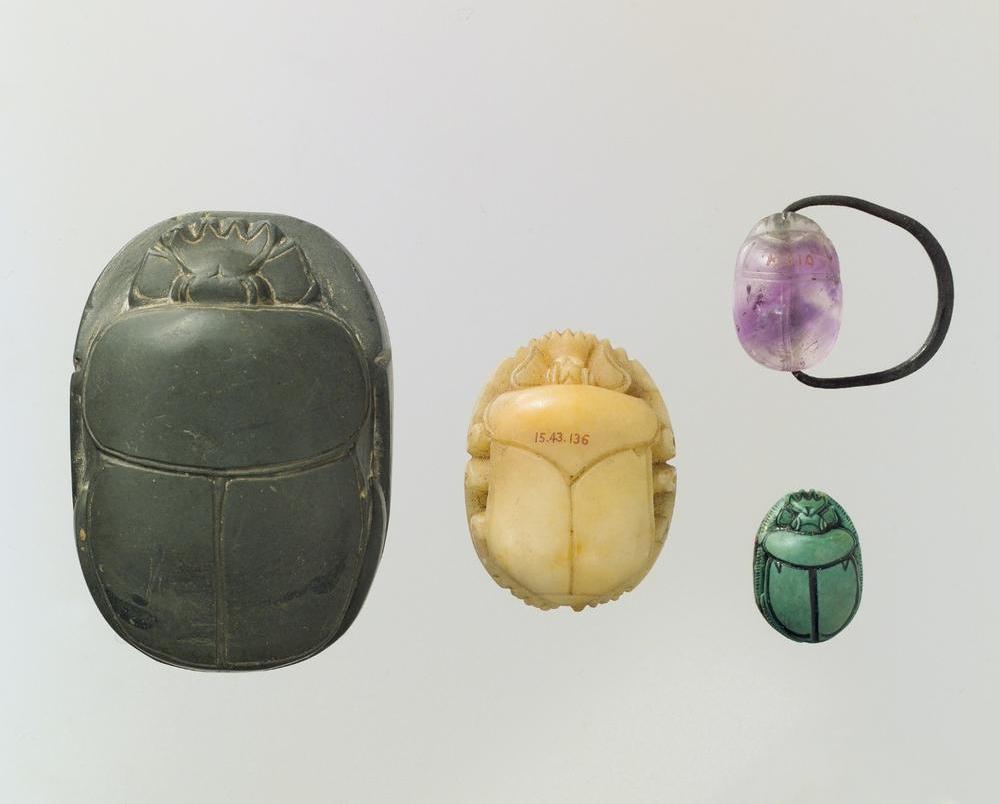
Selection of Heart Scarab Amulets, Middle Kingdom. From left to right, top to bottom. i) Dark Green Stone Scarab Amulet, 10.130.1650; ii) Travertine (Egyptian alabaster) Scarab Amulet; 15.43.136; iii) Amethyst and Copper Finger Ring Scarab Amulet, 10.130.910; iv) Steatite (glazed) Scarab Amulet 27.3.206. (The Metropolitan Museum of Art).
Further Reading
Andrews, C. 1990. Amulets of Ancient Egypt, London: British Museum Press
Connor, S. and Facchetti, F. (2016). Amuleti dell'Antico Egitto, Modena: Panini Editore
Digital Resources
Arico, A. and Foley, K. 2025. Ancient Egyptian Amulets, Archaeological Museum, Johns Hopkins University, https://storymaps.arcgis.com/stories/a301df99d70d4363ae1e6822db528bbf;
Stünkel, I. 2019. Ancient Egyptian Amulets, IN: Heilbrunn Timeline of Art History, The Metropolitan Museum of Art, https://www.metmuseum.org/essays/egyptian-amulets.