
Cast your mind back some 3,500 years or so to Ancient Egypt. It is a warm night, the sky is full of stars, the moon shining brightly, and people have gathered, maybe after a festival or celebration, in their village, outside the temple or in a palace forecourt, lit by torchlight, to hear a recitation of one of the popular stories of the time. It might be recited by a priest or scribe for a more sophisticated audience or perhaps it is acted out with dramatic effects, music, dancers and costumes. We cannot know for certain, but it is fun to speculate. Some of the texts are written in dialogue form so perhaps it is not too much of a stretch.
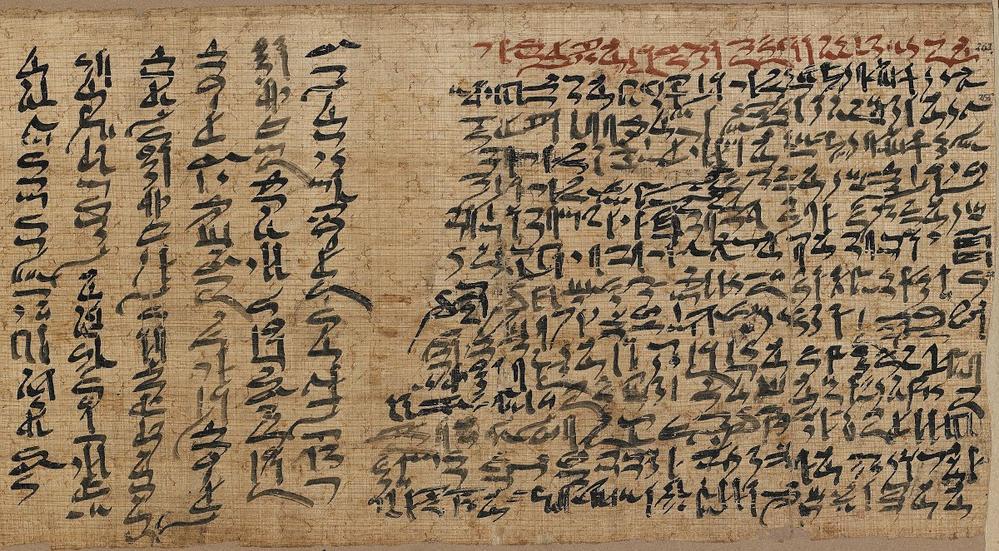
The Tale of Sinuhe, Text B, 1807–1798 BCE. (Ägyptisches Museum und Papyrussammlung, Staatliche Museen zu Berlin, P. Berlin 3022).
The tales that have survived to the modern day have done so by accident. This is particularly true of the ones that have only been found on papyri buried with their owners. They are a group of texts distinct from monumental inscriptions, biographies, poetry and religious writings although some do refer to historical figures. As with more modern fairytales they can be read on several levels – purely taken at face value or going deeper and analysing the text for historical context or for the imparting of moral values and wisdom for example.
R B Parkinson in his book, The Tale of Sinuhe and Other Egyptian Poems 1940-2640 BC, classifies them as shown below. Further information is available by clicking on the links below, where available.
Tales
The Tale of Sinuhe (above)
The Tale of the Eloquent Peasant
The Tale of the Shipwrecked Sailor
The Tale of King Cheops’ (or Khufu’s) Court, also known as Papyrus Westcar (below)
Discourses
The Words of Neferti
The Words of Khakheperreseneb
The Dialogue of a Man and his Soul (Ba)
The Dialogue of Ipuur and the Lord of All
Teachings
The Teaching of King Amenemhat
The Teaching for King Merikare
The ‘Loyalist’ Teaching
The Teaching of the Vizier Ptahhotep
The Teaching of Khety (also known as The Satire of the Trades)
Other Works not included in Parkinson
The Doomed Prince
The Two Brothers
Truth and Falsehood
Horus and Seth
The Report of Wenamun
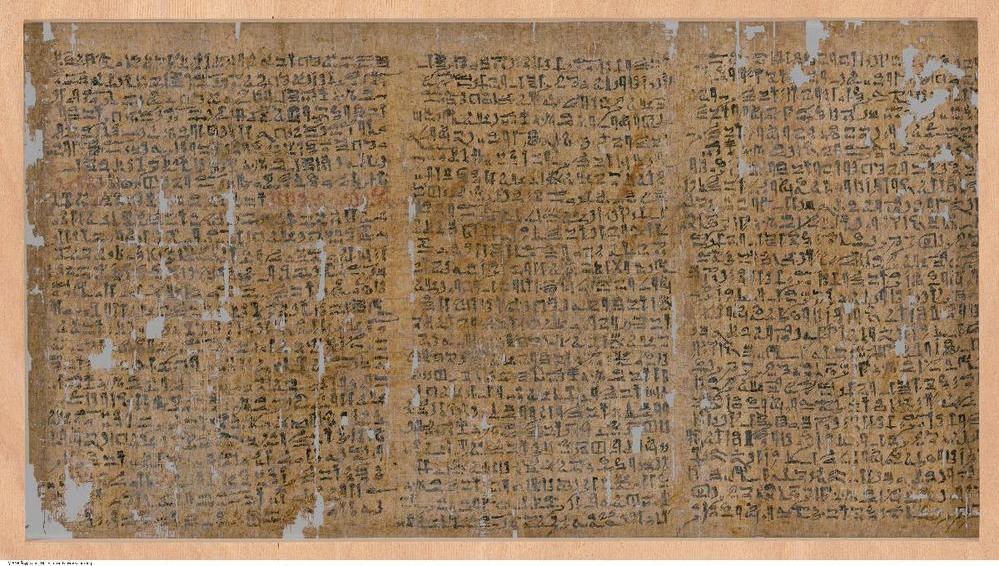
Papyrus Westcar (Berlin P 3033), Photo: Staatliche Museen zu Berlin, Ägyptisches Museum und Papyrussammlung/Public Domain Mark 1.0.