Digitising 19th century ‘souvenir’ albums
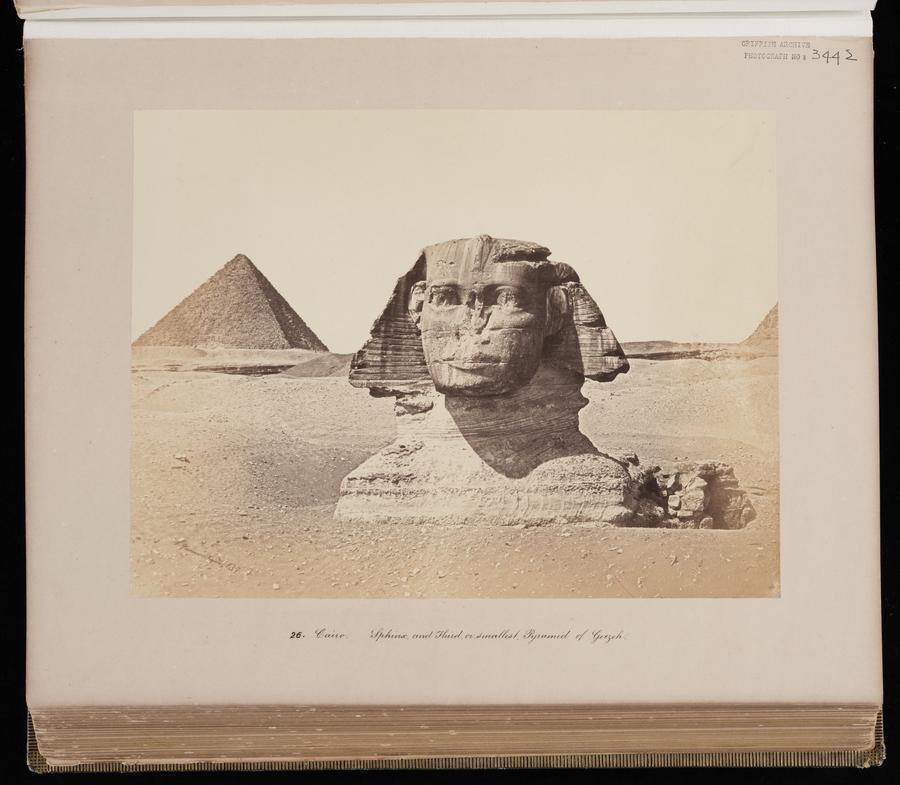
The Griffith Institute were awarded an EES-ASTENE Grant in 2026 to digitise 12 atlas-size ‘souvenir’ albums of studio photographs taken by professional photographers working in Egypt in the second half of the 19th century. These prints were sold to tourists who would select photographs to illustrate their travels and frequently captured their romantic appeal prior to the advent of mass tourism and large-scale excavations. These early photographs are also an exceptionally rich resource for the study of Egypt’s landscape and its people during a period of rapid cultural and political change, as well as the development of early photography and increasing Western engagement with Egypt’s ancient heritage.
Dr Daniela Rosenow (Manager of the Griffith Institute) said: “Bound albums like these are a challenge given their odd size and delicate state, but the team at the Ashmolean Museum Photographic Studio did a really fantastic job as always with our materials!"
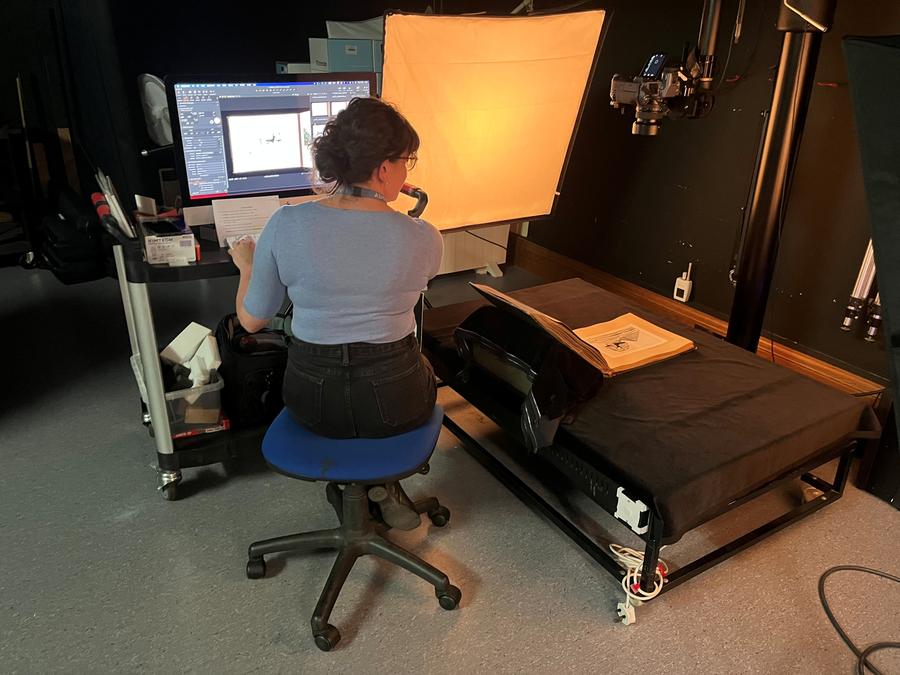
Ellie from the Ashmolean Museum Photographic Studio processing on one of the albums created for Emma Scott
“Thanks to the grant provided by the EES our albums have been digitised, and we are currently working on processing these and making them accessible online via our online catalogue. Some amazing examples that we can't wait to share include the souvenir albums belonging to a woman named Emma Scott, who travelled to Egypt with her three children in 1871-1872.”
These albums contain some of the earliest studio photographs taken in Egypt produced by Wilhelm Hammerschmidt in the 1850s and Antonio Beato from the early 1860s onwards (both popular commercial photographers at this time), including iconic monuments like Cleopatra's Needle, still in Alexandria where it had been moved from Heliopolis, and the Sphinx at Giza still partially submerged in sand. Recently a typescript of a diary kept by Scott during her trip has been identified by the Griffith Institute as being in a private collection in Canada. Digitisation would enable them to reunite these two related resources, linking the diary entries directly with the corresponding images and thereby offering a unique insight into Emma Scott and her family's journey through Egypt. These images, in high-res for the first time, will build on previous resources in photographic databases and increase the visibility of the Institute’s amazing collection of studio photographs.