Recordings will be made available for those unable to attend the live sessions!
What did an Ancient Egyptian grocery list look like? What sorts of local drama did everyday people report in their private letters? In this course, we will read documentary papyri in English translation and examine everything from ancient love letters to heated court depositions! We will see the words of enslaved people alongside the signatures of Roman emperors and Egyptian queens.
You must know that I do not see the sun, because you are out of my view. I have no other sun but you.
Papyrology is the study of inscribed papyrus, a paper-like writing surface used in the ancient Mediterranean. Papyrologists study other handwritten documents on different artefacts too, like potsherds and wooden tablets. Evidence from the "papyrological millennium" (7th century BCE-7th century CE) form a body of information about everyday life that is unparalleled anywhere else in antiquity. Nowhere else is there such detailed written evidence for ancient life in the form of love letters, murder trials, grocery lists, angry petitions, tax disputes, contracts, and the doodles of schoolchildren. They also provide details for historical events that change our view of history.
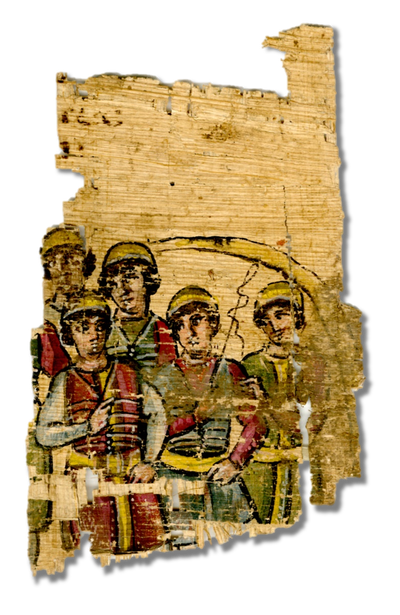
Charioteers Papyrus (P.Ant. inv. 66, courtesy of the Exgypt Exploration Society and the Faculty of Classics, University of Oxford)
Weeks will be organised by theme and historical background will be explained. You will gain an understanding of a highly technical field explained in a fun, engaging way! You will learn how these records are reflective of their historical context, and (most importantly) discover the colossal revelations they can provide.
Texts will be provided in English translation!

Whilst some familiarity with Egyptian history would be helpful for this course, it is not expected nor necessary to appreciate the stories and case studies we will examine. No knowledge of ancient languages is necessary whatsoever!
Tutor

Leah Packard-Grams
Course Outline
Please note that main content will be delivered between 18:00-19:30, though some optional participation (quizzes, Q&A, etc.) may continue beyond that time.
Thursday 29 October 2026, 18:00-19:30 (UK time)
Week One - Papyrology as a discipline
The history of the field, the “papyrological “millennium”, the work of papyrologists, and the important roles of archaeology and epigraphy.
When reading (papyri), one listens in on a conversation of long ago.
Thursday 5 November 2026, 18:00-19:30 (UK time)
Week Two - Papyri from the Late Period
The first written "legal code" of Egypt and the rise of Demotic into the Ptolemaic Period.
Thursday 12 November 2026, 18:00-19:30 (UK time)
Week Three - The Ptolemies and Romans
An historical overview and administrative breakdown; petitions, contracts, and taxes.
Argeios took me away to the great jail in Krokodilopolis [...] and I have up to now been confined already for three years, lacking life's necessities... Therefore, so that I may not waste away in jail, neglected, contrary to all decency, I beg you with every plea.
Thursday 12 November 2026, 18:00-19:30 (UK time)
Week Four - Writing history from the papyri
Methodologies and historiography through case studies.
Thursday 19 November 2026, 18:00-19:30 (UK time)
Week Five - Papyrology of the future
The use of digital and archaeometric tools, the future of the field, and avenues for further study.
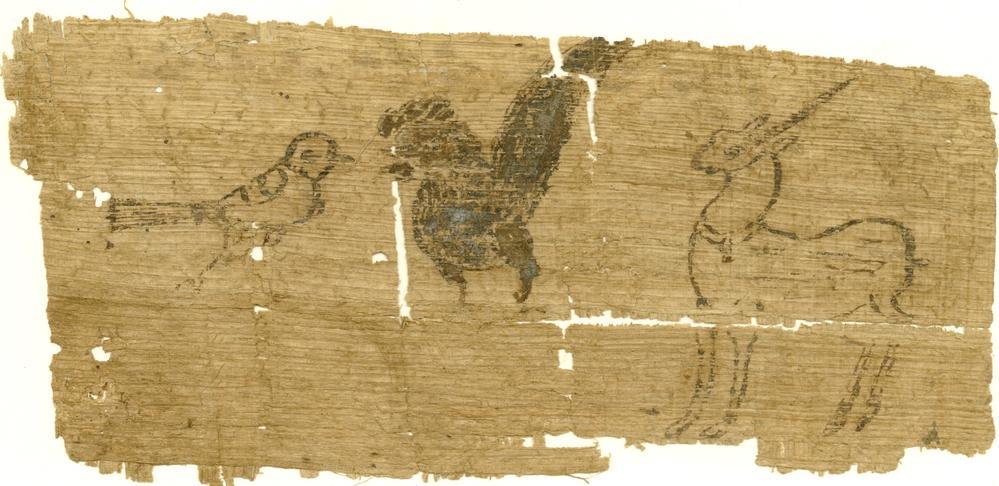
Unicorn featured on papyrus (P.Oxy. LXXXIII 5403, courtesy of the Egypt Exploration Society and the Faculty of Classics, University of Oxford)
Booking and information
Register for your place in advance using the link below. Here, you can select to pay for optional add-ons. You can buy a personalised certificate for £5.99, featuring your name, the event name and start date, which will be signed by the EES Engagement Manager to confirm your attendance at this online course.
After registering, you will receive a confirmation email containing information about your booking. If you do not receive your email, then please check your junk folders before contacting the Egypt Exploration Society. The course will be held on our Zoom platform and attendees will be able to interact by asking questions, using the chat and polls. It is not necessary to have a working webcam or microphone for this course. The online course will be complemented by Google Drive, where resources will be uploaded.
Recordings will be made available for those unable to attend the live sessions! These recordings will be available via a YouTube playlist for approximately one month after the final class.
Please ensure that you have read our guide to attending EES events before the course begins.
go up and turn right. On the right, there is a seven-story building. Above the gate, there is a statue of Tyche opposite a basket factory (once you're there,) throw a shout!