Recordings will be made available for those unable to attend the live sessions!
Astronomical imagery as ceiling decoration is a common theme in ancient Egyptian tombs and temples, with some of the most famous monuments in the country displaying ancient “star skies”. Some of the earliest and most fundamental concepts of time measurement are first recorded in Egypt. Connections between the Sun and stars and Egyptian religion abound. But how did Egyptians observe the sky? Which stars and planets did they recognise and name? And to what uses did they put this knowledge?
Astronomical activity spans ancient Egyptian culture, but we will focus on the Middle Kingdom (c. 2055–1650 BCE, specifically the Asyut area) and the New Kingdom (C. 1550–1069 BCE, primarily Thebes and Abydos) as our bases. This field touches on many aspects of Egyptology: texts, material culture, the built environment, art history, religion and funerary practices, and daily life. All of the above will help us understand the nature and function of stars and their relationship with the Sun, the Moon, the planets, the calendar, timekeeping, funerary texts, and everyday practices.
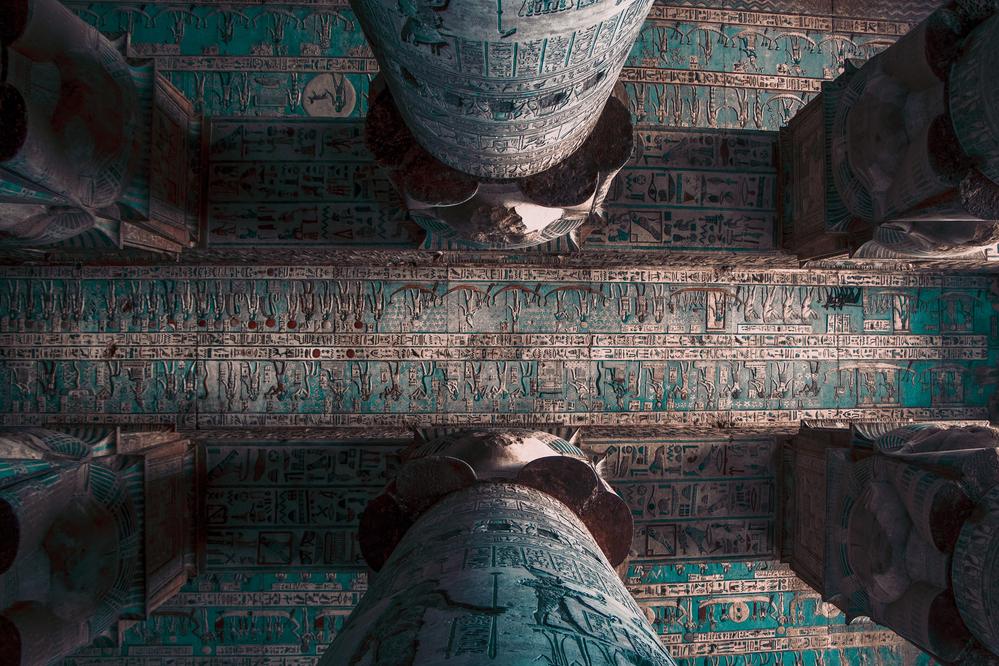
Banner: Lepsius, R., 1846. Denkmäler aus Ägypten und Äthiopien. Berlin: Nicolaische Buchhandlung. Composite extract from Vol VI Section III Pl 170 and 171. Above: Ptolemaic astronomical ceilings at the Temple of Dendera (Image: Shams radwan rrrrrrrrrrr).
On completion of the course, you will be able to recognise and ‘decode’ tomb and temple star ceilings, understand the contribution of ancient Egypt to our present-day timekeeping practices (via the classical world), and identify key ‘characters’ in the Egyptian sky.

The course will not require any prior knowledge of astronomy. Some understanding of ancient Egyptian religion, funerary practices, and chronology will be useful. Egyptian astronomy was naked-eye and descriptive, so we will not be going into any mathematical detail of star movements or positions at all!
Tutor

Professor Sarah Symons
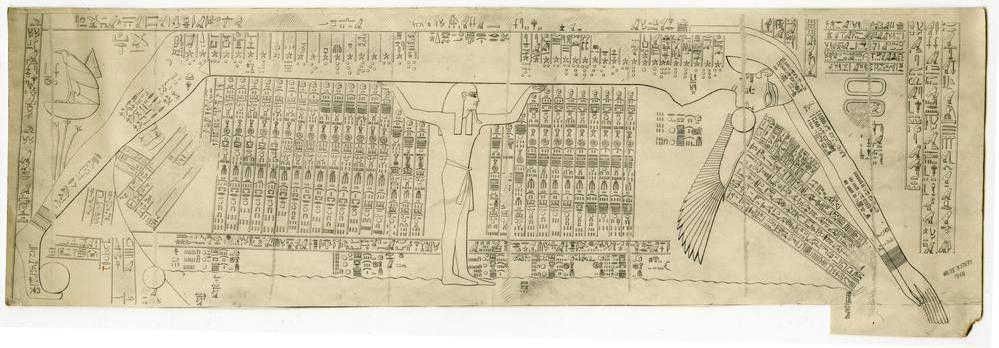
Drawing by W. B. Emery of the scene of Nut and Shu from the west side of the roof of the sarcophagus chamber in the Osireion (EES Archive).
Course Outline
Please note that main content will be delivered between 18:00-19:30, though some optional participation (quizzes, Q&A, etc.) may continue beyond that time.
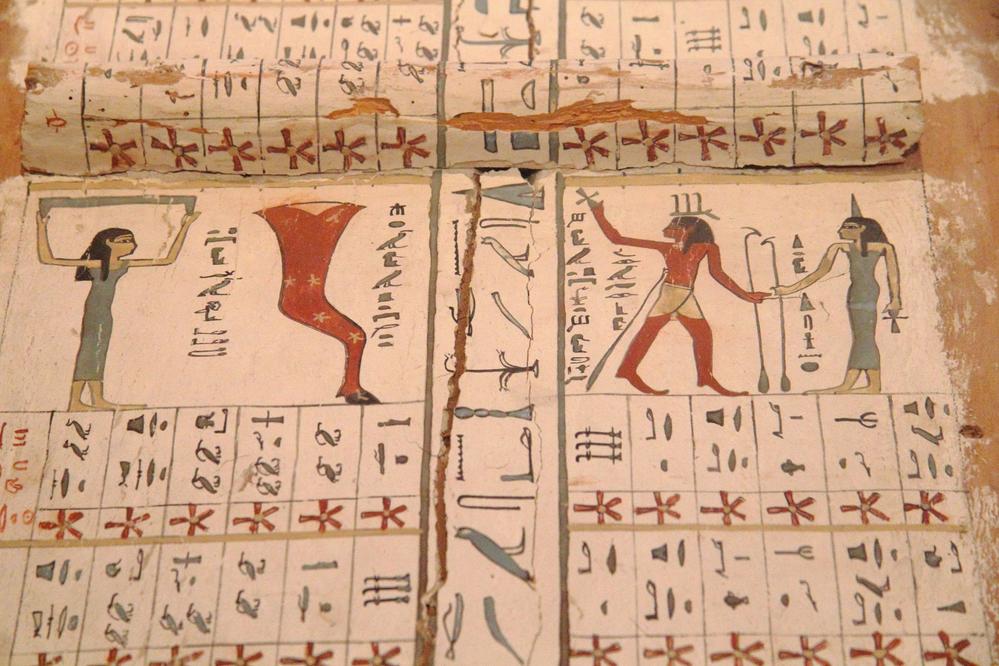
Diagonal star table on the coffin of Nakht (Image: Djehouty).
Thursday 6 August 2026, 18:00-19:30 (UK time)
Week One - Star ‘maps’ and the gods of the sky
Discovering which objects the ancient Egyptians named, how they were depicted, and when/where concepts are first attested.
Thursday 13 August 2026, 18:00-19:30 (UK time)
Week Two - The moving sky
Texts and tables which show us how the movement of the stars and Sun were described, and what this knowledge was used for.
Thursday 20 August 2026, 18:00-19:30 (UK time)
Week Three - Water clocks and sundials
How the sky was used as the basis for timekeeping and the origins of our own idea of ‘hours’, the material culture of time and astronomy in the archaeological record.
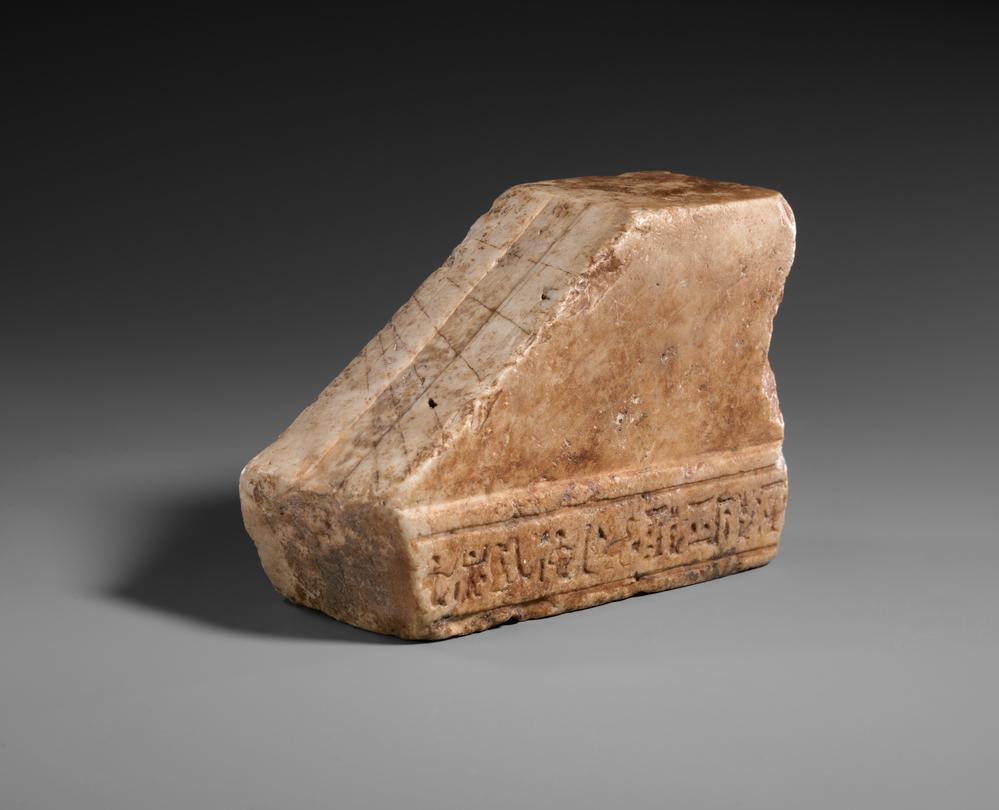
Sloping sundial (The Metropolitan Museum of Art, 12.181.307).
Thursday 27 August 2026, 18:00-19:30 (UK time)
Week Four - The sky-watchers of Thebes
We focus on what ‘astronomers’ in the New Kingdom may have been doing on a daily basis. What activities and projects were they engaged in? What equipment and resources did they learn from and use? What evidence is there that ‘ordinary people’ engaged with astronomy?
Thursday 3 September 2026, 18:00-19:30 (UK time)
Week Five - Egypt as a ‘fount’ of astronomical knowledge
How astronomy in Egypt influenced and was influenced by the ancient and classical world, interactions with Mesopotamia (the zodiac) and Greece/Rome (time and the calendar), and traces of ancient Egyptian astronomical ideas up to the present day.
Booking and information
Register for your place in advance using the link below. Here, you can select to pay for optional add-ons. You can buy a personalised certificate for £5.99, featuring your name, the event name and start date, which will be signed by the EES Engagement Manager to confirm your attendance at this online course.
After registering, you will receive a confirmation email containing information about your booking. If you do not receive your email, then please check your junk folders before contacting the Egypt Exploration Society. The course will be held on our Zoom platform and attendees will be able to interact by asking questions, using the chat and polls. It is not necessary to have a working webcam or microphone for this course. The online course will be complemented by Google Drive, where resources will be uploaded.
Recordings will be made available for those unable to attend the live sessions! These recordings will be available via a YouTube playlist for approximately one month after the final class.
Please ensure that you have read our guide to attending EES events before the course begins.
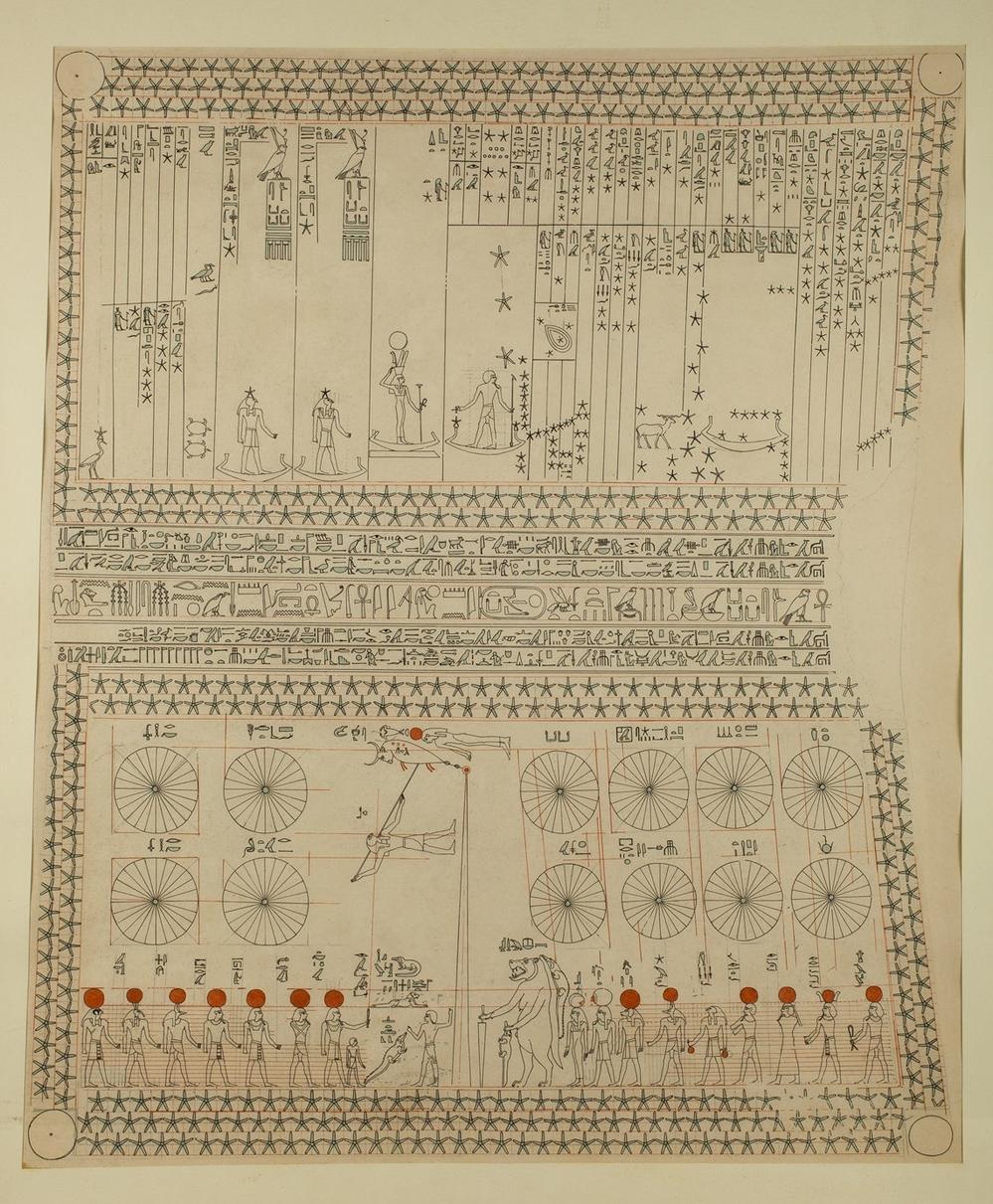
Night sky depicted on the ceiling of the tomb of Senenmut (TT 353) at Deir el-Bahari (The Metropolitan Museum of Art, 48.105.52).