Recordings will be available for those unable to attend the live event
Efforts to protect and preserve Egypt’s tangible and intangible heritage have been around for millennia, from ancient Egyptian princes to modern NGOs. This study day unpacks some of these historic attempts and questions the concept of ‘preservation’, what has been preserved, for whom, and why.
Dr Campbell Price will begin the event by investigating attempts by the ancient Egyptians to safeguard the royal narratives of the past by restoring monuments while, simultaneously, usurping those of previous rulers. Dr Jennifer Cromwell will explore the processes of erasure and selective conservation involved in early EES excavations relating to Late Antique Coptic monuments. The continued reuse and restoration of monuments throughout the Medieval Period will be revealed by Prof Doris Behrens-Abouseif. Finally, Dr Dina Bakhoum will introduce the restorations of the Comité de Conservation des Monuments de l'Art Arabe in Egypt and whether these reflect "conservation" or "reinvention". A closing discussion hosted by Carl Graves and Seif El Rashidi, who will unpack what ‘preservation’ really means, and to what extent heritage continues to inform our future. A tale as old as time.
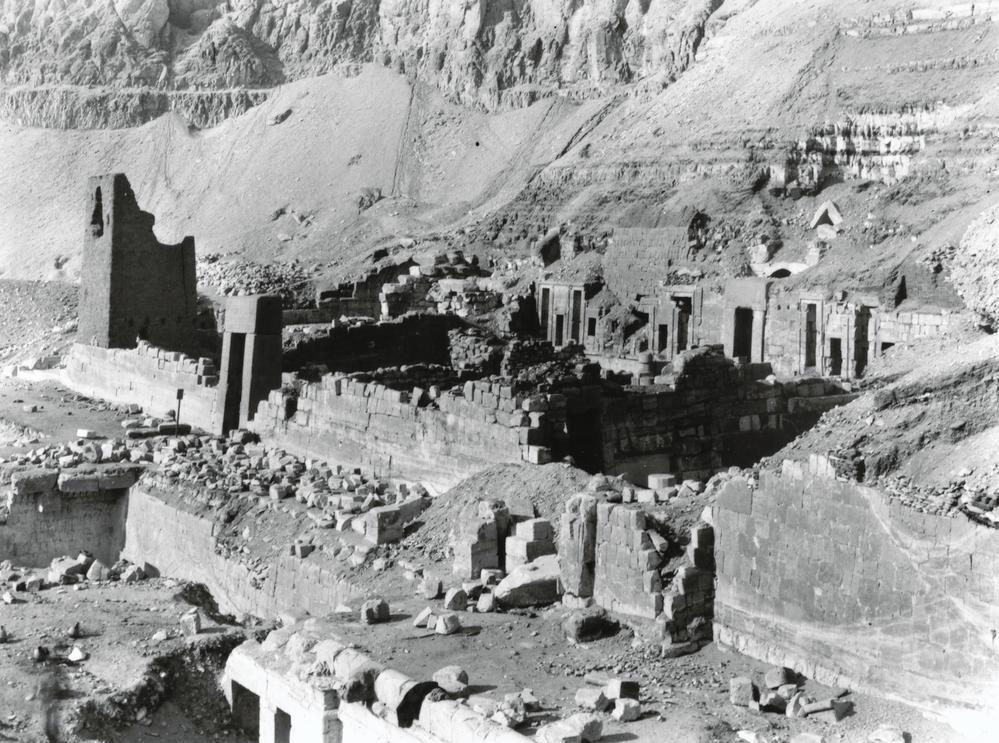
Deir el-Bahari before reconstruction by Naville on behalf of the Egypt Exploration Society (Dr Jennifer Cromwell)
This event will be hosted by Carl Graves, Director of the Egypt Exploration Society and Seif El Rashidi, Director of the Barakat Trust. It has been co-organised by the Egypt Exploration Society and the Barakat Trust with support from the British Egyptian Society and Royal Asiatic Society. Members of these organisations are eligible to book tickets at a reduced rate.
Funds generated from ticket sales will directly contribute to our Building the Future campaign, as part of EES Fest. Thank you.

Venue
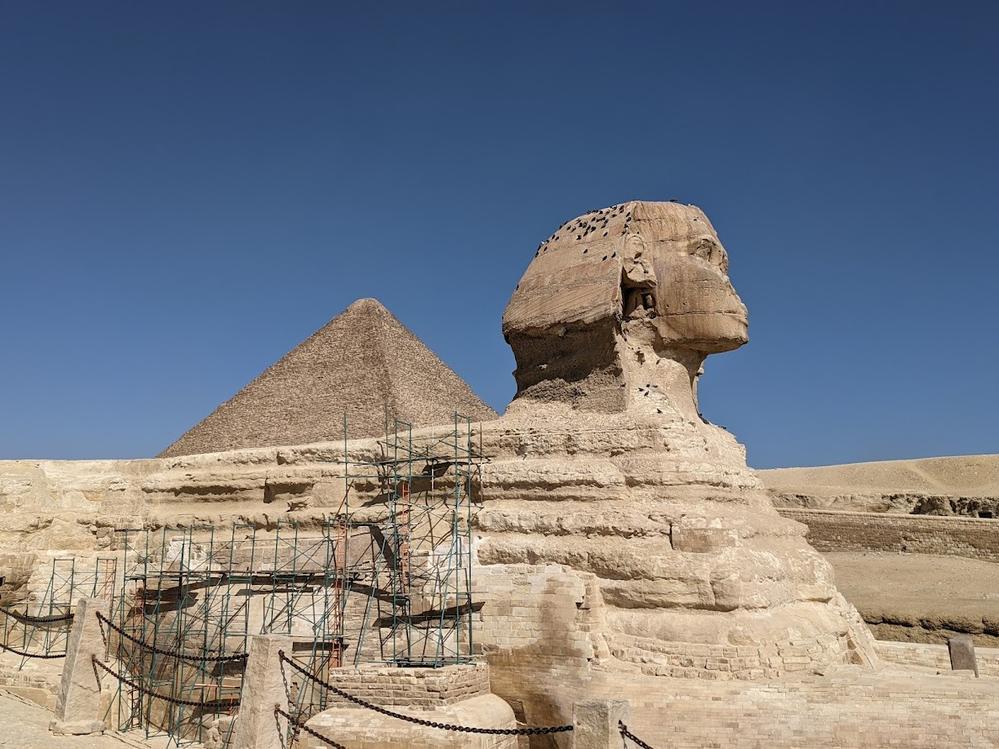
The Sphinx of Giza, which was unearthed in antiquity, as recorded Thutmose IV on the Dream Stela seen on the banner (Dr Campbell Price)
Speakers
In-person Presenters

Dr Campbell Price
Dr Jennifer Cromwell

Professor Doris Behrens-Abouseif
Online Presenters
Dr Dina Bakhoum
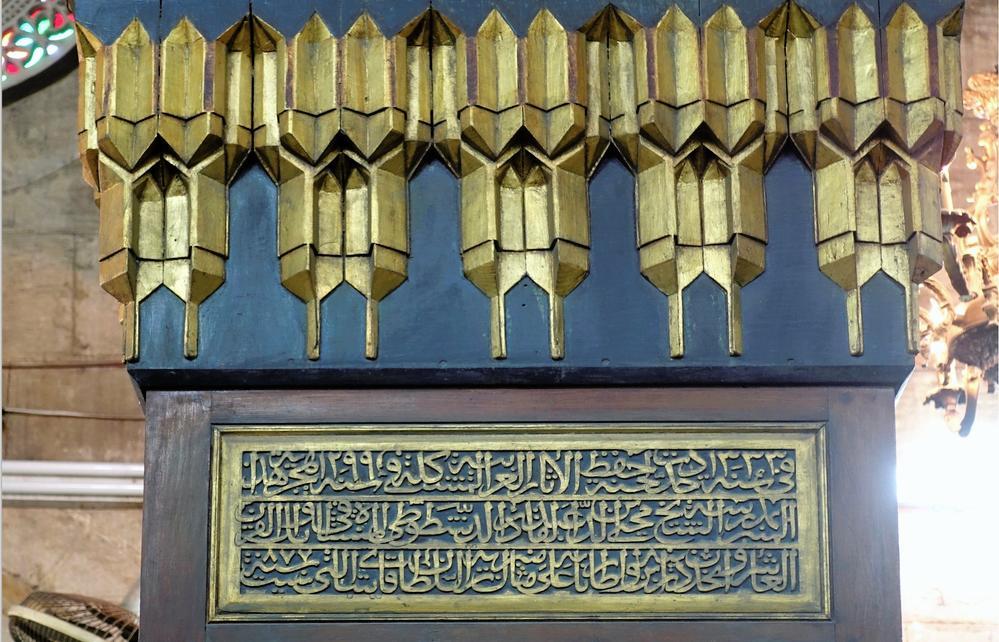
Restoration inscription on the minbar of the mosque of of al-Dashṭūṭī (Dr Dina Bakhoum)
Schedule
Note that the times shown below are based on UK time (BST). Please double-check if you are joining online from a different time zone. Recordings will be made available after the live event for one month afterwards.
12:50 – Event opens for all attendees with introductions
13:00-13:45 – Researching, Restoring and Participating in the Pharaonic Past (Dr Campbell Price)
13:45-14:30 – Naville, Carter, and the loss of Late Antique heritage through the excavation of Deir el-Bahri (Dr Jennifer Cromwell)
14:30-15:00 – Refreshment Break (please do not log off the event if online)
15:00-15:45 – Preserving Power and Piety: Architectural Conservation and Cultural Memory in the Mamluk Era (Professor Doris Behrens-Abouseif)
15:45-16:30 – The restorations of the Comité de conservation des monuments de l’art arabe in Egypt (1881-1950s) and the question of authenticity (Dr Dina Bakhoum)
16:30-17:00 – Discussion
Event closes for online attendees
17:00-18:00 – Drinks reception
Event closes for in-person attendees
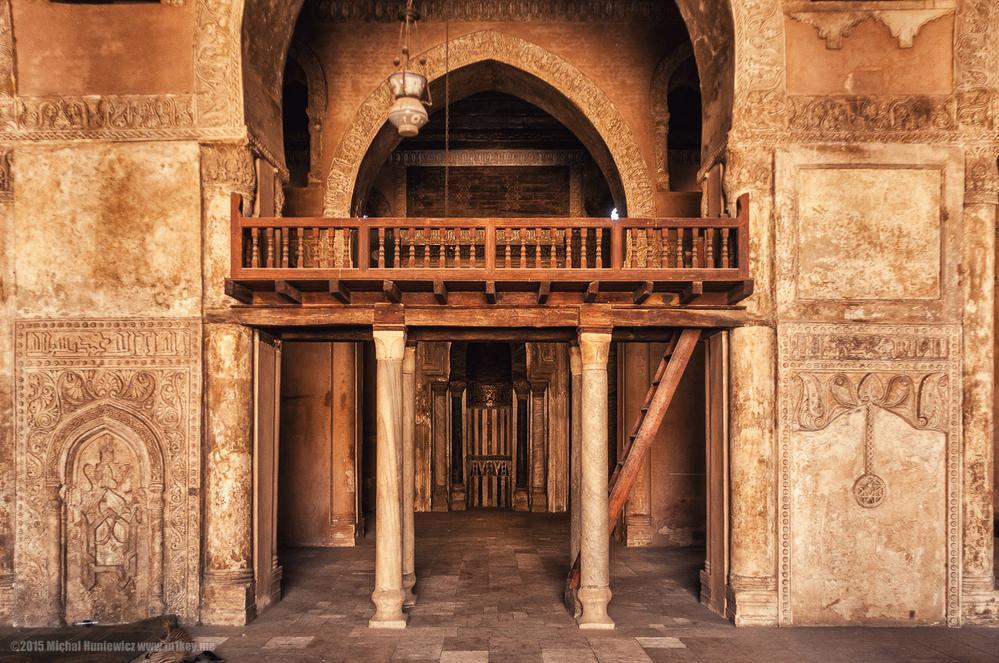
Mamluk dikka (raised platform) in the Ibn Tulun mosque in Cairo (Professor Doris Behrens-Abouseif)
Abstracts
Researching, Restoring and Participating in the Pharaonic Past
Dr Campbell Price
It is widely acknowledged that the first archaeologists to encounter 'Ancient Egypt' were the ancient Egyptians themselves. Examples ranging from Middle Kingdom excavations of Early Dynastic remains at Abydos, via the 'restoration' work of Prince Khaemwaset at Saqqara, to Late Period investigation of the pyramids of Giza. This lecture reviews some of these Pharaonic engagements with their own heritage and asks how far the modern notion of 'preservation' can be mapped onto their motivations.
Naville, Carter, and the loss of Late Antique heritage through the excavation of Deir el-Bahri
Dr Jennifer Cromwell
Edouard Naville's excavations of Deir el-Bahri during the 1890s focussed on revealing and restoring the mortuary temple of Hatshepsut. Clearing of the site removed all post-New Kingdom material, including the mudbrick superstructures of a late antique Coptic monastery, the monastery of Apa Phoibammon. Naville was not interested in these later remains and removed them without record, but a young Howard Carter at the site photographed these remains. This talk will discuss the processes of erasure and selective conservation in the process of EES' excavation of Deir el-Bahri, and more broadly during work of the late 19th and early 20th centuries.
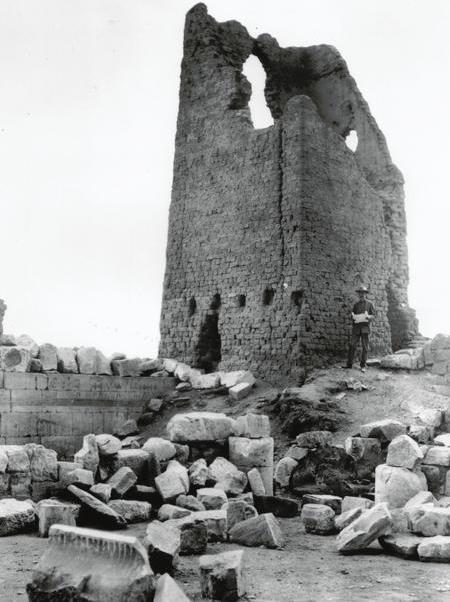
Remains of the Monastery of Apa Phoibammon at Deir el-Bahri (Dr Jennifer Cromwell)
Preserving Power and Piety: Architectural Conservation and Cultural Memory in the Mamluk Era
Professor Doris Behrens-Abouseif
Moving beyond modern definitions of conservation, this lecture will examine how the reuse and restoration of monuments in the Mamluk Period served to reinforce political legitimacy, religious devotion, and urban identity in medieval Cairo. The talk will highlight how people engaged with earlier Islamic and pre-Islamic monuments to assert continuity with the past while shaping contemporary narratives. Ultimately, it situates Mamluk practices within broader discussions of memory, authenticity, and the evolving life of monuments.
The restorations of the Comité de conservation des monuments de l’art arabe in Egypt (1881-1950s) and the question of authenticity
Dr Dina Bakhoum
The Comité de conservation des monuments de l’art arabe (1881-1950s) was an Egyptian organization established under the Ministry of Awqāf (Islamic religious and charitable endowments) to work on inventorying and restoring Arab (Islamic) monuments; later, Coptic monuments were added to its mandate. This presentation will provide an overview of the Comité’s establishment, mandate, and members. Through a number of case studies, light will be shed on the restoration decisions taken during the Comité’s lifetime, raising the question: to what extent do these interventions impact our art-historical understanding of these monuments and their authenticity?
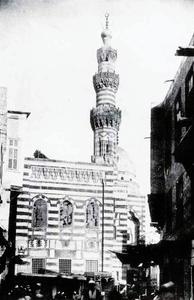
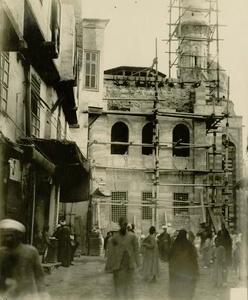
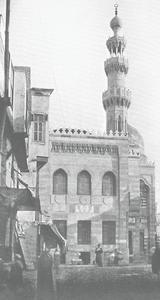
Photographs before, during, and after the restoration of the Minaret of the mosque of Qijmās al-Isḥāqī by the Comité de conservation des monuments de l’art arabe (Dr Dina Bakhoum). Credits: 1) Bulletin of the Comité no. 9, 2) Unknown photographer, K.A.C. Creswell Collection of Photographs of Islamic Architecture, Rare Books and Special Collections Library, The American University in Cairo, 3) Bulletin of the Comité no. 9 (2nd edition).
Booking and information
After registering, you will receive a confirmation email containing information about joining the event in person and online, including your personalised Zoom link for joining the event. If you do not receive your email, then please check your junk folders before contacting the Egypt Exploration Society. The study day will be held on our Zoom platform and attendees will be able to interact by asking questions, using the chat and polls. The skills session will be complemented by Google Drive, where resources will be uploaded.
Event tickets are only refundable if notice is provided at least one week prior to the event start date.
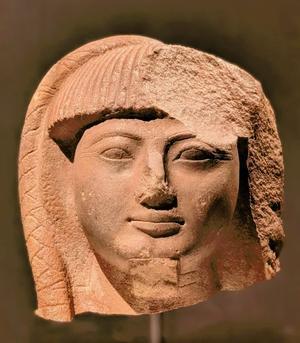
Statue fragment depicting Prince Khaemweset located in Neues Museum in Berlin (Dr Campbell Price)
The venue and Zoom webinars have a limited attendance capacity, so please only sign up if you’re confident that you can attend. If this event does become sold out, please click the book now button to join the waiting list. We will email you if a place becomes available for this event, so you may reconfirm your interest in attending this study day. We recommend that you join our online events using a PC or laptop. We recommend live online attendance to participate in the Q&A session with the speaker, but this study day will be recorded and made available for a limited time on YouTube after the event for both online and in-person attendees.
Please ensure that you have read our guide to attending EES online events before the course begins.