Recordings will be made available for those unable to attend the live sessions!
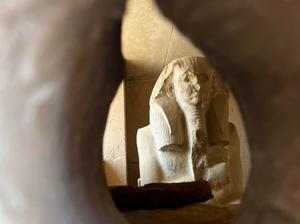
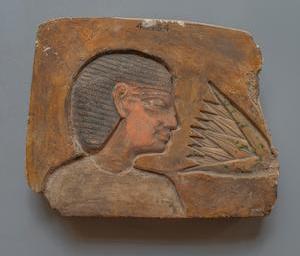
What we see, hear, feel, taste, and smell greatly influences how we, as humans, understand ourselves and everything around us. These sensory experiences allow us to continuously (re)shape our lived reality/ies. It is, therefore, not difficult to imagine that humans in the past would have been similarly impacted by their own embodied experiences. What about in ancient Egypt? What information from ancient Egyptian written, iconographic, and archaeological sources can help lift the veil on the lived realities of people at the time? What would ancient Egyptian people have seen, smelled, or touched when going about their day? How would the consumption of food and (alcoholic) beverages, as well as their bodily movements have shaped their lived reality/ies? How might these ancient experiences be similar to or different from our modern perspective? In this five-week course, we will discuss the impact of the different human senses (vision, hearing, taste, smell, touch, proprioception), on embodied experience(s) in ancient Egypt. Each week, students will have the opportunity to engage with selected sources (no preparation needed), including iconographic depictions, texts in translation, and audio reconstructions, and 3D recreations of landscapes and buildings.
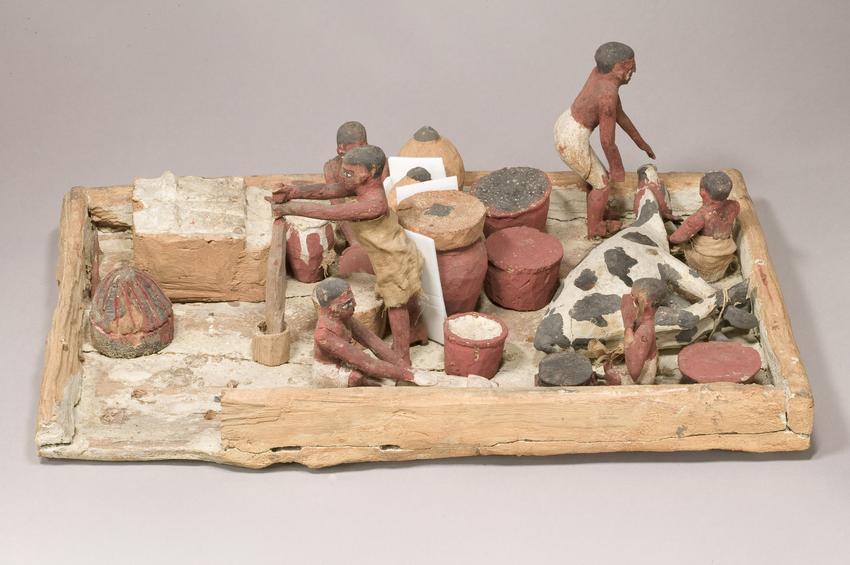
Students will gain a fresh, sensory-grounded understanding of ancient Egyptian life to reconstruct the everyday experiences of seeing, hearing, tasting, smelling, and moving through that world. They will learn how the widely varied corpus of sources for human experience in ancient Egypt can be interrogated together to illuminate lived reality, a transferable skill for studying any ancient society. The course also encourages critical reflection on embodiment itself: students will consider how sensory experience shapes human understanding of the world more generally, and will compare ancient perceptual worlds with their own, developing awareness of both the continuities and the cultural distance between past and present.

The historical background provided in each class, will make this course fully accessible to anyone with or without a background in history.
Participants will leave the course with a deeper understanding of the diverse cultural landscape of ancient Egypt and how identities were reflected in and influenced by material culture, food, art, language, religion, cross-cultural interactions, and more.
Tutor
Maarten Praet
Course Outline
Please note that main content will be delivered between 18:00-19:30, though some optional participation (quizzes, Q&A, etc.) may continue beyond that time. Sessions are ordinarily delivered live, but a recording may be provided where the Tutor is unable to attend.
Thursday 1 April 2027, 18:00-19:30 (UK time)
Week One - I Spy with my Little Eye
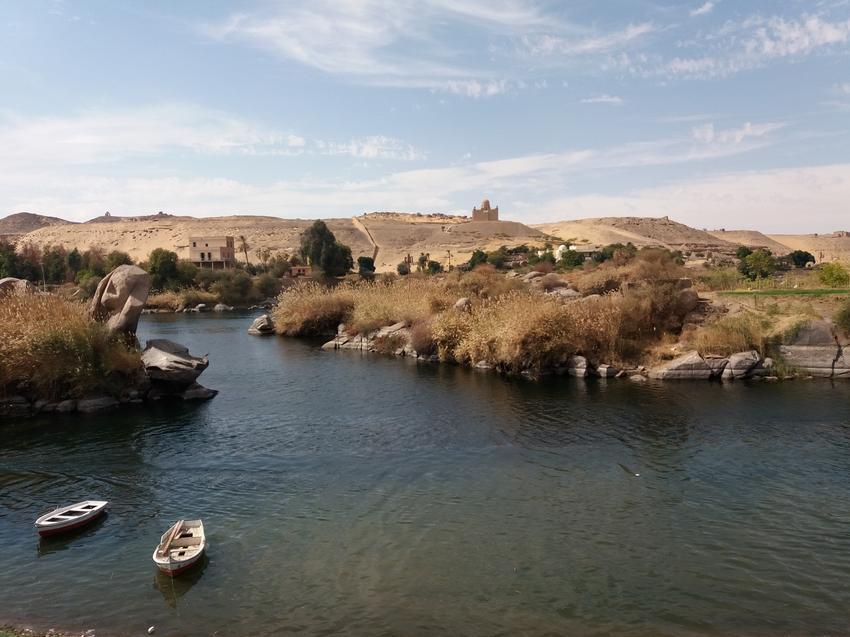
The first class introduces key background concepts in Egyptian religion, kingship, and funerary beliefs, alongside the geography and timeline of ancient Egypt. It then turns to the week's theme, visual experience, using evidence such as wall decoration, architecture, and the ancient natural landscape to explore how ancient Egyptians perceived their environment.
Thursday 8 April 2027, 18:00-19:30 (UK time)
Week Two - Touching Voices from the Past
This class covers the auditory and tactile senses. The first part of the class introduces archaeoacoustics (the study of sound in the past) and will aim to show that sound had its own agency in ancient Egypt. Afterwards, we will examine touch as the most direct contact with the ancient Egyptian world, through examples of physical intimacy and crafts.
Thursday 15 April 2027, 18:00-19:30 (UK time)
Week Three - “Many Sweet-Smelling Things”: Food for Thought?
Week 3 dives into smell and taste in ancient Egypt: from tomb paintings scented with fragrant resins and the divine blue water-lily, to a society where pleasant scents and stench marked status and social hierarchy. On the taste side, we explore the Egyptian diet, elite hunting privileges that turned flavour into power, and the funeral meal as a ritual of comfort and community
Thursday 22 April 2027, 18:00-19:30 (UK time)
Week Four - Absence of Senses: Living with Disabilities in Ancient Egypt
This session explores disability in ancient Egypt, where the Instruction of Amenemope explicitly forbade mocking the blind, lame, or people with dwarfism, who appear in art as valued members of society, from workers to the high-ranking official Seneb, and in protective roles linked to the god Bes. This inclusive attitude extended even to the throne itself: Tutankhamun, who lived with a clubfoot and bone necrosis, was buried with 130 walking sticks, orthopaedic sandals, and adapted chairs, showing that a king with a disability could still rule
Thursday 29 April 2027, 18:00-19:30 (UK time)
Week Five - Now vs Then: Experiencing ancient Egypt in 2026
The final class explores how we experience ancient Egypt today, from the history of tourism and Tut-mania to the repatriation debate over objects like the Rosetta Stone and the bust of Nefertiti. It closes with a discussion about the (dis)advantages of digital technology, such as virtual reality reconstructions, photogrammetry, and augmented reality experiences.
Booking and information
Register for your place in advance using the link below. Here, you can select to pay for optional add-ons. You can buy a personalised certificate for £5.99, featuring your name, the event name and start date, which will be signed by the EES Engagement Manager to confirm your attendance at this online course.
After registering, you will receive a confirmation email containing information about your booking. If you do not receive your email, then please check your junk folders before contacting the Egypt Exploration Society. The course will be held on our Zoom platform and attendees will be able to interact by asking questions, using the chat and polls. It is not necessary to have a working webcam or microphone for this course. The online course will be complemented by Google Drive, where resources will be uploaded.
Recordings will be made available for those unable to attend the live sessions! These recordings will be available via a YouTube playlist for approximately one month after the final class.
Please ensure that you have read our guide to attending EES events before the course begins.